Key Takeaways
-
AC leak repair costs range from $100-$300 for simple seal replacements to $1,500-$2,000+ if the compressor fails; ignoring early warning signs like warm air or weak airflow can turn a $150 fix into an expensive compressor replacement.
-
A professional AC diagnosis ($100-$200) is essential before repairs, as leaks can hide in multiple locations (O-rings, hoses, condenser, evaporator) and misdiagnosing the problem wastes money on unnecessary repairs.
-
Skipping proper repair steps or only recharging refrigerant without fixing the leak is a costly mistake; a complete repair requires system evacuation, leak detection, component repair, vacuum testing, and refrigerant recharge.
-
Avoid DIY leak detection kits and over-the-counter sealant products, which often miss leaks or damage the entire AC system, potentially converting a $200 repair into a $1,500+ job.
-
Regular AC maintenance including annual inspections, refrigerant level checks, and hose inspections prevents small leaks from snowballing into major problems and keeps costs within the typical $384-$445 average repair range.
-
Choose experienced, specialized AC repair shops that use proper diagnostic equipment, offer warranties, and stock parts in inventory rather than selecting based solely on lowest price, which may indicate inexperienced technicians.
If your car’s air conditioning has stopped blowing cold air, an AC leak might be to blame. In Tampa’s intense heat, a broken A/C isn’t just uncomfortable — it can make driving dangerous. Understanding how much to fix an AC leak in a car helps you plan ahead, avoid surprises, and make smart repair decisions. Costs can range from as little as $100 for a simple seal replacement to over $2,000 if the damage spreads to the compressor. The good news? Many of the biggest expenses are completely avoidable. This guide walks you through 13 common mistakes car owners make when dealing with AC leaks — and how steering clear of them can save you serious money. Whether you drive a personal sedan, a work truck, an RV, or a fleet vehicle, this information will help you protect your investment and stay cool all year long. Let’s dive in.
Why AC Leaks Are Such a Big Deal
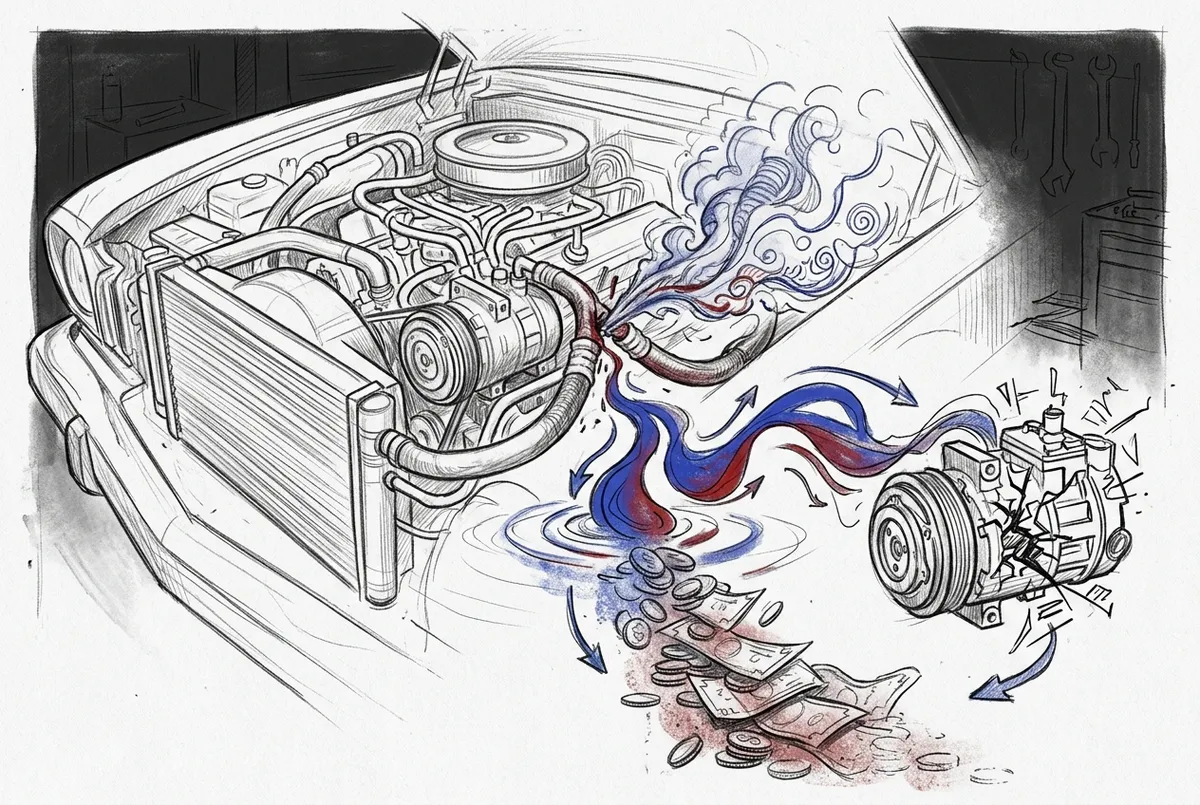
Your car’s air conditioning system is a closed loop. It relies on refrigerant to move heat out of the cabin. When refrigerant leaks out, the whole system suffers. Left unchecked, a small leak can snowball into a full compressor failure — and that’s where repair bills really climb.
According to Kelley Blue Book, AC compressor replacement can run $1,546 to $1,705. That’s a steep price to pay for a problem that started with a $150 fix. Knowing the common mistakes helps you act early and act smart. You can also explore how much auto AC repair costs in 2026 for a broader picture of what to budget.

Mistake 1: Ignoring the Early Warning Signs
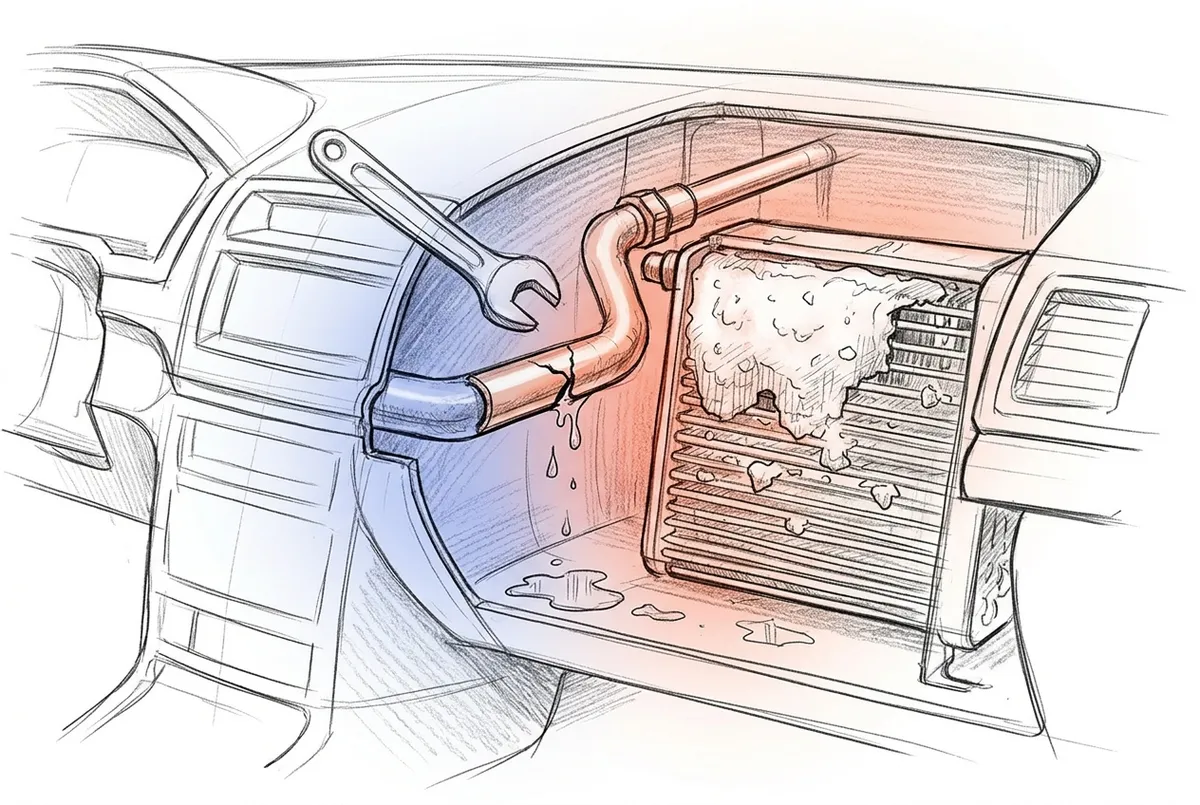
The most expensive mistake is doing nothing. If your A/C blows warm air or weak airflow, don’t wait. These are classic signs of a refrigerant leak. Early repairs almost always cost less than repairs after the damage spreads.
Watch for these warning signs:
- Warm or lukewarm air from vents
- A hissing noise near the dashboard or under the hood
- Ice buildup on AC components
- Oily residue near AC fittings or hoses
- Higher fuel consumption than usual
Check out 5 signs you need car AC repair near you to spot trouble before it gets expensive.
Mistake 2: Skipping a Proper Diagnosis
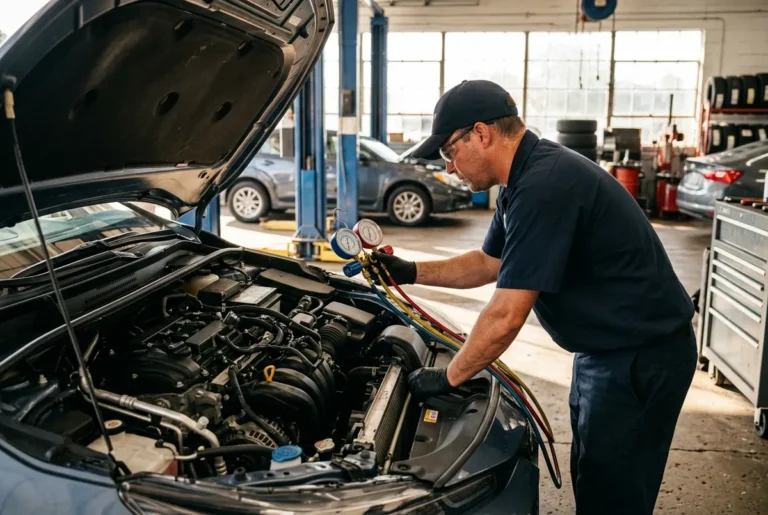
Many car owners assume they know where the leak is. But AC systems are complex, and leaks can hide in multiple spots. A professional diagnosis costs $100 to $200 — a small price compared to repairing the wrong part.
Common leak locations include:
- O-rings and seals — Most common and least expensive to fix ($100–$300)
- Hoses and connections — Mid-range repair ($200–$600)
- Condenser or evaporator — More involved and costly ($500+)
Learn more about the key facts about car AC diagnostic cost in 2026 before you book a service visit.
Mistake 3: Choosing a DIY Leak Detection Kit
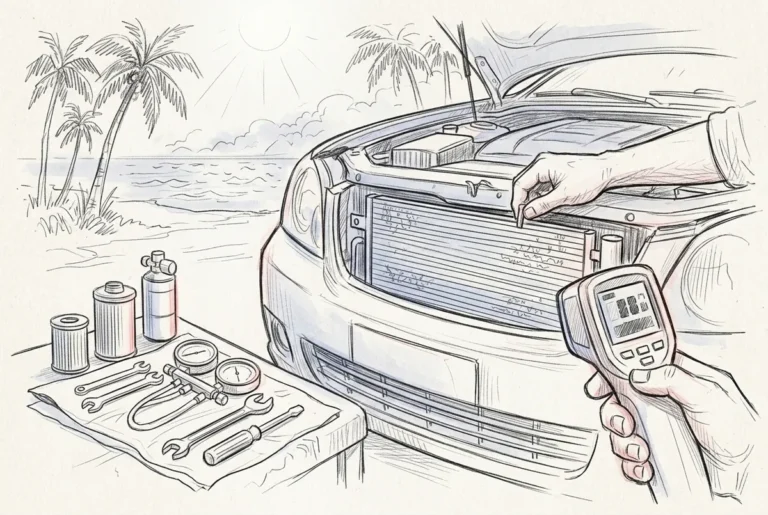
DIY leak detection kits cost between $50 and $150 and seem like a bargain. But they often miss small or slow leaks. Professional shops use UV dye, electronic leak detectors, and pressure testing — tools that find leaks that consumer kits simply can’t. Missing even one leak source means the problem comes right back.
Mistake 4: Only Recharging the Refrigerant
A refrigerant recharge costs $150 to $300 at a shop. It makes the A/C blow cold again — temporarily. But if the underlying leak isn’t fixed, you’ll lose that refrigerant all over again. Worse, repeated recharges without a repair can damage the compressor.
Here’s the difference between a recharge and a full repair:
| Service | What It Does | Average Cost | Fixes the Leak? |
|---|---|---|---|
| Refrigerant Recharge | Refills refrigerant level | $150–$300 | No |
| Leak Detection | Finds the source of the leak | $100–$200 | No (diagnosis only) |
| Seal/O-Ring Replacement | Seals small leak points | $100–$300 | Yes (minor leaks) |
| Hose Replacement | Replaces cracked or worn hoses | $200–$600 | Yes |
| Condenser Replacement | Fixes major component damage | $500+ | Yes |
Mistake 5: Delaying Repairs on Fleet Vehicles
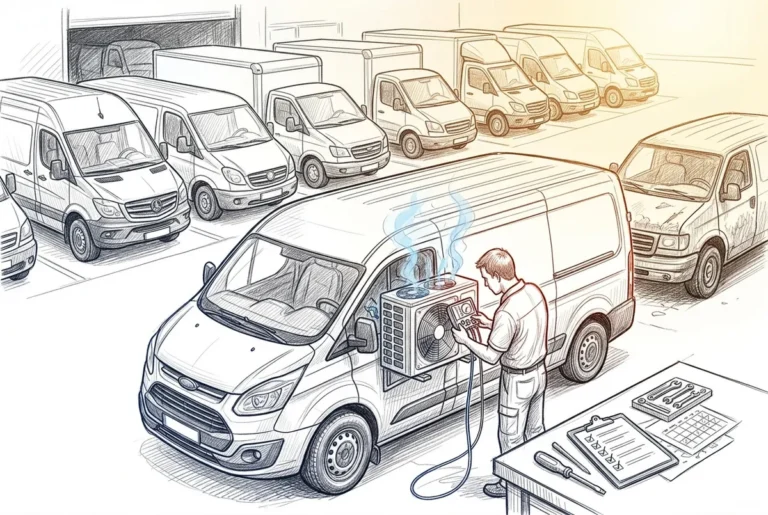
If you manage a fleet of cars or trucks, one delayed AC repair can cascade into multiple vehicles with the same problem. Fleet downtime is costly. A quick repair now keeps drivers on the road and productive. Explore Marks Air’s full range of AC services to find a maintenance plan that fits your fleet’s needs.
Mistake 6: Using Sealant Products as a Fix
Over-the-counter AC sealant products promise a quick, cheap fix. The reality? These products can clog and damage the entire AC system — including the compressor. Technicians often refuse to service systems that have had sealant added. You could turn a $200 repair into a $1,500+ job.
Mistake 7: Ignoring the Full Repair Process
A proper AC leak repair isn’t just plugging a hole. It involves several steps that protect the system long-term. Here’s what a complete repair looks like:
- System evacuation — Safely removes remaining refrigerant
- Leak detection — Pinpoints all leak sources
- Component repair or replacement — Fixes the actual problem
- Vacuum test — Confirms the system holds pressure
- Refrigerant recharge — Refills the system to the correct level
Skipping any of these steps leaves the door open for repeat failures. Make sure your technician follows all five.
Mistake 8: Not Asking About Warranty Coverage
Many car owners don’t ask about warranties before approving repairs. A reputable shop will stand behind their work. At Marks Air, repairs are backed by a warranty — giving you peace of mind long after you leave the shop. Always ask what’s covered before work begins.
Mistake 9: Assuming All Shops Have the Right Parts
Not every auto shop stocks specialized AC parts. Waiting days for a part to arrive means more downtime. This matters especially for bus operators, RV owners, and heavy equipment operators who can’t afford to wait. Marks Air keeps a full inventory of AC parts including their KOOL-TEMP line and components from trusted brands like SPAL, ACT, BCC, gpd, and Omega — many available same day in Tampa.
Mistake 10: Skipping Regular AC Maintenance
Prevention is always cheaper than repair. Regular maintenance catches small leaks and worn seals before they become big problems. This is especially important in Tampa, where the heat puts constant demand on your vehicle’s AC system.
Key maintenance habits include:
- Annual AC inspection before summer heat peaks
- Checking refrigerant levels regularly
- Inspecting hoses and fittings for wear
- Replacing cabin air filters on schedule
- Running the AC periodically even in cooler months to keep seals lubricated
Read these 5 AC maintenance tips every Tampa vehicle owner needs to stay ahead of costly repairs.
Mistake 11: Choosing the Cheapest Quote Without Checking Experience
The lowest price isn’t always the best deal. An inexperienced technician may misdiagnose the leak, repair the wrong part, or skip critical steps. This leads to repeat repairs and higher total costs. Look for shops with proven experience in vehicle AC systems specifically — not just general auto repair.
Here’s what to look for when choosing an AC repair shop:
- Specializes in vehicle AC (not just general auto)
- Uses proper leak detection equipment
- Offers a repair warranty
- Has transparent pricing and explains the repair process
- Has strong customer reviews
Marks Air has served Tampa since 1971 and is a member of the Mobile Air Climate Systems Association (MACS), ensuring technicians stay current with industry standards. You can also read customer reviews to see what others have experienced.
Mistake 12: Overlooking the Impact on Older or High-Mileage Vehicles
Is it worth fixing an AC leak on an older car? In most cases, yes — especially if the rest of the vehicle is in good condition. A $200–$400 repair is much less than buying a new vehicle. However, if the compressor has already failed due to neglect, the math changes. Get a full diagnosis first so you can make an informed decision.
Check out this helpful guide on AC repair vs. AC replacement to weigh your options.
Mistake 13: Not Knowing Who to Call in Tampa
Finding the right shop matters. Not every shop has the experience, parts, or equipment to handle AC leaks in every type of vehicle. From personal cars to heavy equipment and transit buses, you need a specialist.
Here’s a quick summary of typical AC leak repair costs based on the leak source:
| Leak Source | Typical Repair Cost | Complexity |
|---|---|---|
| O-rings or seals | $100–$300 | Low |
| Hoses | $200–$600 | Moderate |
| Condenser | $500–$900 | High |
| Evaporator core | $600–$1,200 | High |
| Compressor (if damaged) | $800–$2,000 | Very High |
Marks Air handles all of these repairs at their Tampa facility. They work on cars, trucks, buses, RVs, and heavy equipment — all under one roof. Find out how to find reliable auto AC service in Tampa Bay so you know exactly what to look for in a shop.
What Does a Complete AC Leak Repair Really Cost?
To put it all together, here’s a realistic look at total costs depending on the severity of the leak:
- Minor leak (O-rings, seals): $150–$400 total including recharge
- Moderate leak (hoses, fittings): $300–$700 total
- Major leak (condenser, evaporator): $700–$1,500 total
- Neglected leak with compressor damage: $1,500–$2,000+
According to Kelley Blue Book, the average car AC repair cost falls between $384 and $445. Catching the problem early keeps you well within that range. You can also explore 10 auto AC repair mistakes that cost you more money for even more ways to save.
Tampa Drivers: Get Expert Help Fast
Tampa’s heat doesn’t take a day off — and neither does Marks Air. With over 50 years of experience focusing exclusively on vehicle AC systems, they’re ready to diagnose your leak, explain your options honestly, and get you back on the road fast. You can check out what customers are saying on Yelp and follow updates on Facebook. You can also visit Marks Air on Google to read reviews and get directions to their Tampa location.
Don’t wait for a small leak to become a compressor replacement. Schedule your AC service with Marks Air today or call 813-988-1671 to speak with a specialist who genuinely cares about keeping you cool.
FAQs
Q: How much does it typically cost to fix an AC leak in a car?
A: The cost depends on where the leak is coming from. Simple seal or O-ring repairs run around $100–$300, while hose replacements can cost $200–$600. More serious leaks involving the condenser or evaporator can push costs to $500 or more — so catching the problem early really does save you money!
Q: What are the most common causes of AC leaks in cars?
A: The most common culprits are worn O-rings and seals, cracked or aging hoses, faulty fittings, and corroded condensers. Over time, heat and vibration break down these components — especially in hot climates like Tampa where the AC runs hard almost year-round.
Q: Can I just recharge my AC instead of fixing the leak?
A: A recharge will make your AC blow cold again for a while, but it won’t fix the actual leak. The refrigerant will just escape again, and repeated recharges without repairing the source can eventually damage the compressor — turning a $200 fix into a $1,500+ headache.
Q: How long does it take to repair a car AC leak?
A: Most minor AC leak repairs — like replacing seals or hoses — can be completed in a few hours. More complex jobs involving the condenser or evaporator may take a full day. Either way, a good shop will give you a realistic timeline upfront so there are no surprises.
Q: Is it worth fixing an AC leak in an older car?
A: In most cases, absolutely yes! If the rest of your vehicle is running well, a $150–$400 leak repair is far more economical than replacing the entire vehicle. We recommend getting a full diagnosis first so you can weigh the repair cost against the car’s overall condition and make the best choice for your situation.