
Key Takeaways
-
Look for a true automotive A/C specialist rather than a general shop that only adds refrigerant, since a recharge alone often fails to fix leaks or failed parts.
-
Confirm that technicians hold EPA Section 609 certification, a federal requirement for servicing vehicle A/C systems for payment, and ask them directly.
-
Ask which refrigerant your vehicle uses: R-1234yf and R-134a are not interchangeable, and the shop needs compatible service equipment.
-
Insist on a diagnosis before repair and a written estimate approved by you before any work begins, so you know the cost upfront.
-
Read recent reviews that specifically mention A/C diagnosis and repairs, and look for patterns across multiple sources rather than single reviews.
-
Walk away if a shop quotes prices without inspecting the car, pushes a recharge without checking for leaks, or pressures you to decide immediately.
Few things feel worse than climbing into your car on a hot Tampa afternoon and getting a blast of warm, sticky air. Your first thought is probably, “Who can fix this fast, and who can I trust?” That is a fair question. A/C work can get pricey, and not every shop handles it the same way.
The good news is that spotting top rated car AC repair shops is easier than it looks. You just need to know what separates a true A/C specialist from a shop that only tops off refrigerant and hopes for the best.
In this friendly guide, we will walk you through what to look for, what to ask, and which red flags to avoid. Whether you drive a daily commuter, a delivery truck, a bus, an RV, or a piece of heavy equipment, these steps will help you pick a shop with confidence. Let’s get you back to cool air.

What Makes a Car AC Repair Shop Top Rated?
A top rated shop is more than a high star score. Great shops earn their reputation through skill, honesty, and clear communication. Think of it like finding a good family doctor. You want someone who listens, explains, and treats the real problem.
Here is what the best shops tend to have in common:
- Automotive A/C focus. They work on vehicle systems, not home HVAC units.
- Proper diagnosis first. They find the cause instead of guessing.
- Clear written estimates. You know the cost before work begins.
- Legal compliance. Technicians hold the required federal certification.
- Recent, detailed reviews. Customers describe real A/C repairs.
- Follow-up and warranty. They stand behind the repair.
A shop that checks most of these boxes is likely worth a call. If you want a deeper look at how to read the signs, our guide on what makes a trusted automotive AC service in Tampa is a handy companion.

How to Find Top Rated Car AC Repair Shops: Step by Step
Ready to start your search? Follow these steps in order. They save time, and they help you avoid a costly mistake.
- Search for specialists. Look for shops that focus on vehicle air conditioning, not general repair only.
- Check recent reviews. Read feedback from the past year or two that mentions A/C diagnosis or repair.
- Verify certification. Ask if technicians hold EPA Section 609 certification.
- Ask about your refrigerant. Confirm they can service your vehicle’s specific type.
- Request a written estimate. Get it before any repair starts.
- Ask about warranty. Find out how long parts and labor are covered.
Let’s break down the most important ones so you know exactly what to ask.
Start With Real A/C Specialists
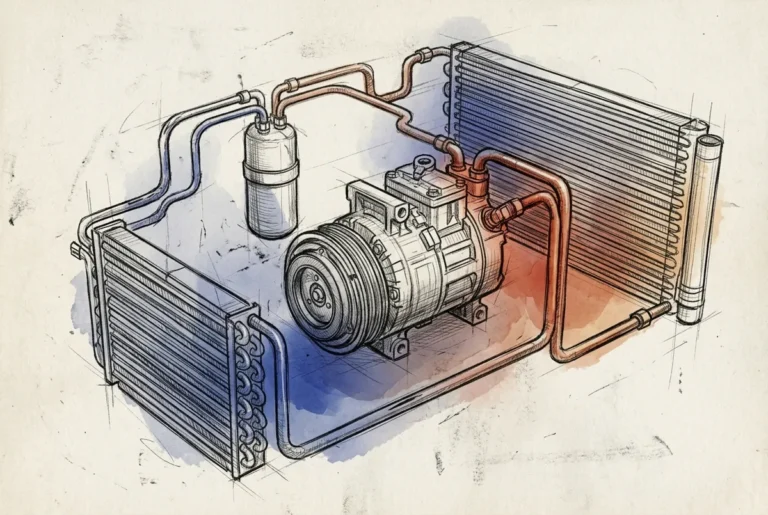
Your car’s A/C system is a sealed loop with a compressor, condenser, evaporator, hoses, and sensors. When one part fails, the whole system can struggle. A specialist sees these problems every day, so they spot patterns faster.
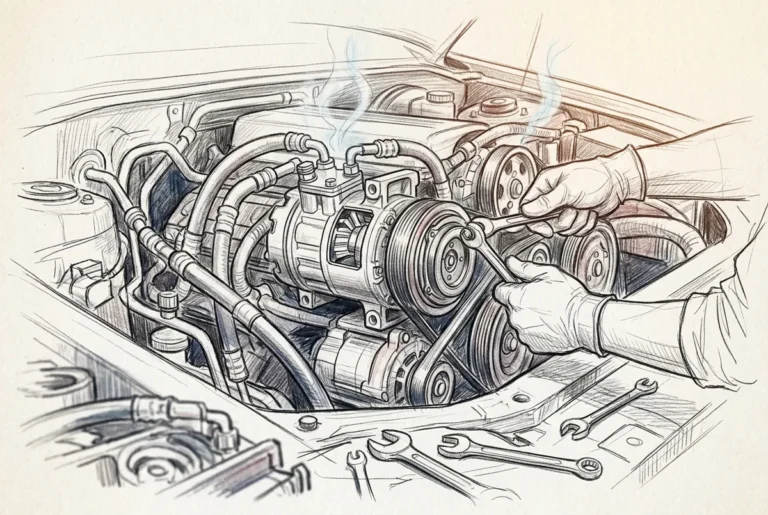
For example, if your A/C blows warm air, a specialist knows the cause could be a leak, a bad compressor clutch, a clogged part, or an electrical issue. A general shop might just add refrigerant. That can bring cool air back for a short time, but it will not fix the real problem. For help sorting out causes, check out these 10 reasons your AC is blowing warm air.
Confirm EPA Section 609 Certification
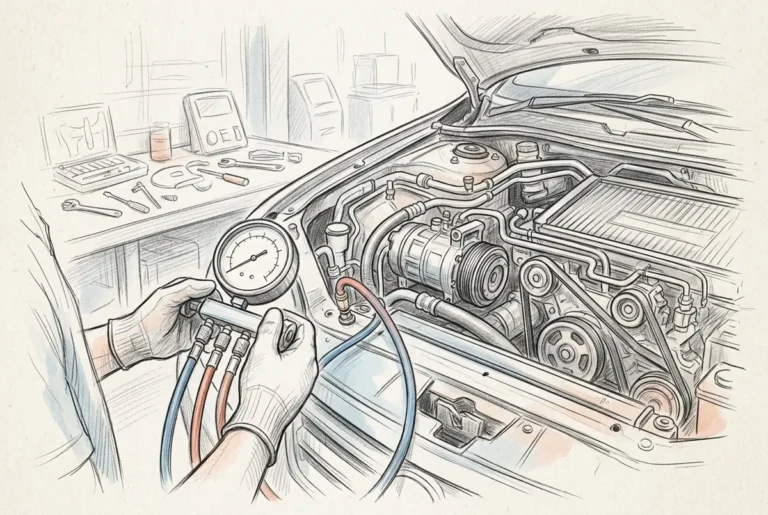
This one matters a lot. In the United States, technicians who service motor vehicle A/C systems for payment must hold EPA Section 609 certification through an EPA-approved program. Shops must also use approved refrigerant-handling equipment and keep records showing their technicians are certified.
Why does this matter to you? Certified technicians know how to recover and handle refrigerant safely. EPA rules prohibit intentionally venting refrigerant during service. A shop that follows the rules protects the environment, and it usually works with more care in general.
You can simply ask, “Are your technicians EPA 609 certified?” A good shop will answer yes right away and be proud of it. You may also see ASE credentials, which show automotive training. These are helpful, but they are not the same as the federal 609 requirement. Think of them as two different badges that both add value.
Look for Reviews That Mention A/C Work
A shop can have five stars because of oil changes and still be average at A/C repair. So read reviews with care. Look for comments that mention:
- Clear explanations of what was wrong
- Estimates that matched the final bill
- Cool air that lasted after the repair
- Friendly, honest communication
- Quick follow-up if something came up
Compare patterns across more than one source. A single glowing or angry review tells you little. A steady pattern tells you plenty. You can browse Marks Air reviews on Yelp or read customer reviews on our own site to see what useful feedback looks like. If you want more tips on this skill, see our post on how to read AC repair shop reviews the right way.
Questions to Ask Before You Hand Over Your Keys
A quick phone call can tell you a lot. Here are smart questions to ask any shop you are considering:
- Do you diagnose the system before recommending a repair?
- Are your technicians EPA Section 609 certified?
- What refrigerant does my vehicle use, and can you service it?
- Will you give me a written estimate and get my approval before any work?
- Do you offer a warranty on parts and labor?
- Have you worked on my type of vehicle before?
Notice that question three matters more every year. Many newer vehicles use a refrigerant called R-1234yf, while older ones often use R-134a. These are not interchangeable, and the service equipment can differ. A shop should confirm your vehicle’s correct refrigerant and have compatible equipment. To learn more, read about HFO-1234yf refrigerant and what it means for your vehicle.
Recharge or Repair? Know the Difference
Here is a common trap. Your A/C stops cooling, a shop adds refrigerant, and the cool air returns. Everyone is happy, until the air turns warm again a few weeks later.
Refrigerant does not get “used up” like gas in a tank. If the level is low, it usually leaked out. A recharge alone may not fix a leak or a failed part. A top rated shop will look for the leak, explain what they find, and recommend a real fix. If you want to learn how leaks are found, see these tips on how to detect AC leaks before they get worse, and avoid these common AC leak mistakes.
What Should Car AC Repair Cost?
Prices vary a lot by vehicle, location, and the exact problem. The table below shows rough third-party estimates from a 2025 consumer guide. These are not fixed or regulated prices, so treat them only as a starting point. Always get a written quote for your own vehicle.
| Service | Rough Estimated Range |
|---|---|
| A/C diagnostics and leak testing | $75 to $250 |
| R-134a recharge service | $150 to $350 |
| R-1234yf recharge service | $250 to $550 |
| Compressor replacement | $800 to $1,500 or more |
| Full A/C overhaul | $1,500 to $4,000 or more |
See how wide those ranges are? That is why a vehicle-specific diagnosis matters so much. For a closer look at pricing, check out how much auto AC repair costs in 2026 and these key facts about car AC diagnostic cost.
Dealership or Independent Shop?
Both can do good work, and the right choice depends on your needs. Here is a simple comparison.
| Factor | Dealership | Independent A/C Specialist |
|---|---|---|
| Brand-specific knowledge | Strong for that brand | Often broad across many makes |
| A/C focus | One of many services | Can be the main specialty |
| Parts options | Usually OEM parts | OEM and quality alternatives |
| Vehicle types served | Mostly cars and light trucks | Can include buses, RVs, and heavy equipment |
If you drive something beyond a standard passenger car, a specialist is often the easier fit. Not every dealership works on buses, motorhomes, or construction machines, but many A/C specialists do.
Tips for Different Kinds of Drivers
Your vehicle shapes what you need from a shop. Here is what matters most for each type of owner.
- Car owners: Look for fast diagnosis, honest estimates, and a warranty. Tampa heat is tough on a daily driver.
- Truck drivers: You need quick turnaround. Downtime costs money, so ask about same-day parts and service.
- Bus operators: Passenger comfort and safety come first. Choose a shop that handles larger systems and ongoing maintenance.
- RV enthusiasts: Ask if the shop services RV cooling systems, and plan repairs before a big trip.
- Heavy equipment operators: A cool cab reduces fatigue. Pick a shop experienced with industrial and agricultural machines.
- Fleet owners: Look for a partner who offers diagnostics and preventive plans. Read about preventive versus reactive fleet AC maintenance to see the savings.
Red Flags to Watch For
Even a polite shop can raise concerns. Be careful if you notice any of these signs:
- They quote a price over the phone without ever looking at the car.
- They push a recharge without checking for leaks.
- They will not put the estimate in writing.
- They cannot say which refrigerant your vehicle uses.
- They pressure you to decide right now.
- They avoid questions about technician certification.
If you see two or more of these, it is okay to walk away and get a second opinion. You can also review these auto AC repair mistakes that cost you more money before you decide.
Why Local Experience Matters in Tampa
Tampa’s heat and humidity put real stress on vehicle A/C systems. Compressors work harder, and parts wear faster. A shop that has served the area for years understands these patterns and plans for them.
That is one reason longtime local specialists earn loyal customers. Marks Air, for example, has been a family-owned, woman-owned A/C specialist in Tampa since 1971. The team handles cars, trucks, buses, RVs, and heavy equipment, and it is a member of the Mobile Air Climate Systems Association (MACS). You can read more on our About Marks Air page, explore our A/C services, or see what neighbors say when you visit us on Google — Marks Air.
Simple Habits That Keep Your A/C Healthy
The best repair is the one you never need. A little care goes a long way, especially in a hot climate.
- Run your A/C regularly, even in cooler months, to keep seals lubricated.
- Listen for odd noises like rattling or squealing when the A/C kicks on.
- Notice weak airflow or musty smells, and get them checked early.
- Schedule a yearly inspection before summer heat arrives.
- Fix small leaks quickly before they damage bigger parts.
Want a quick checklist? Try these 5 AC maintenance tips every Tampa vehicle owner needs. And if you are wondering whether your car is already asking for help, read these 5 signs you need car AC repair.
Bringing It All Together
Choosing among top rated car AC repair shops does not have to feel stressful. Look for a true A/C specialist, confirm EPA Section 609 certification, and read recent reviews that talk about real A/C repairs. Ask about your refrigerant, get a written estimate, and make sure the shop looks for the cause instead of just adding refrigerant.
Do those few things, and you will avoid most of the headaches that come with car A/C repair. You deserve cool air, fair pricing, and a team that treats you like family.
Ready to feel the difference? Schedule service with Marks Air today, or call us at 813-988-1671 to talk with a Tampa A/C specialist who has been keeping drivers cool since 1971.
FAQs
Q: How do I find a top rated car AC repair shop near me?
A: Start by searching for shops that focus on vehicle air conditioning, then read recent reviews that mention real A/C repairs. Call a few shops and ask about EPA Section 609 certification, your vehicle’s refrigerant, and written estimates. The ones that answer clearly and kindly are usually the ones to trust.
Q: Does a car AC technician need EPA Section 609 certification?
A: Yes. In the United States, technicians who service a motor vehicle A/C system for payment must hold EPA Section 609 certification. Shops also need approved refrigerant-handling equipment and must keep records of their technicians’ certifications.
Q: Can a mechanic just recharge my car AC without fixing a leak?
A: A mechanic can add refrigerant, but it may not last if there is a leak or a failed part. Low refrigerant usually means it escaped somewhere. A good shop will diagnose the cause and explain your repair options before topping it off.
Q: What is the difference between R-134a and R-1234yf?
A: These are two different refrigerants used in vehicle A/C systems. Many newer vehicles use R-1234yf, while many older ones use R-134a. They are not interchangeable, so your shop should confirm which one your vehicle needs and have compatible service equipment.
Q: How much does car AC diagnosis and repair usually cost?
A: Costs vary by vehicle and problem. One 2025 consumer guide estimates diagnostics at about $75 to $250, with compressor replacement at roughly $800 to $1,500 or more. Treat these as rough estimates and ask for a written quote for your own vehicle.