Key Takeaways
-
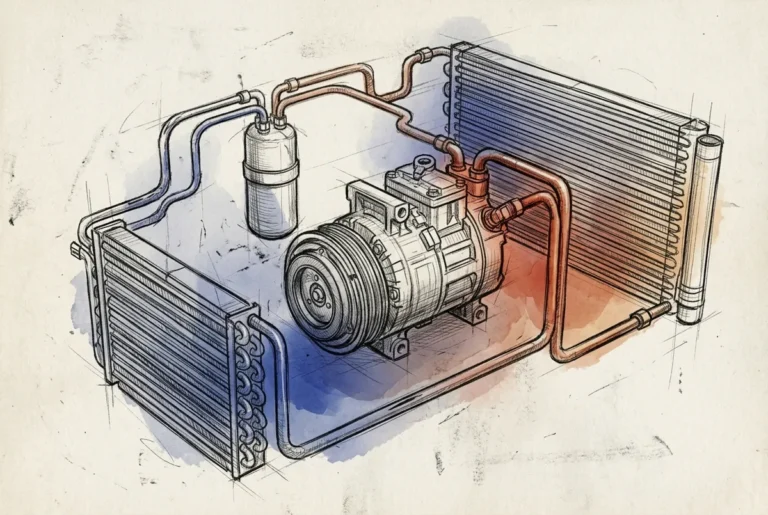
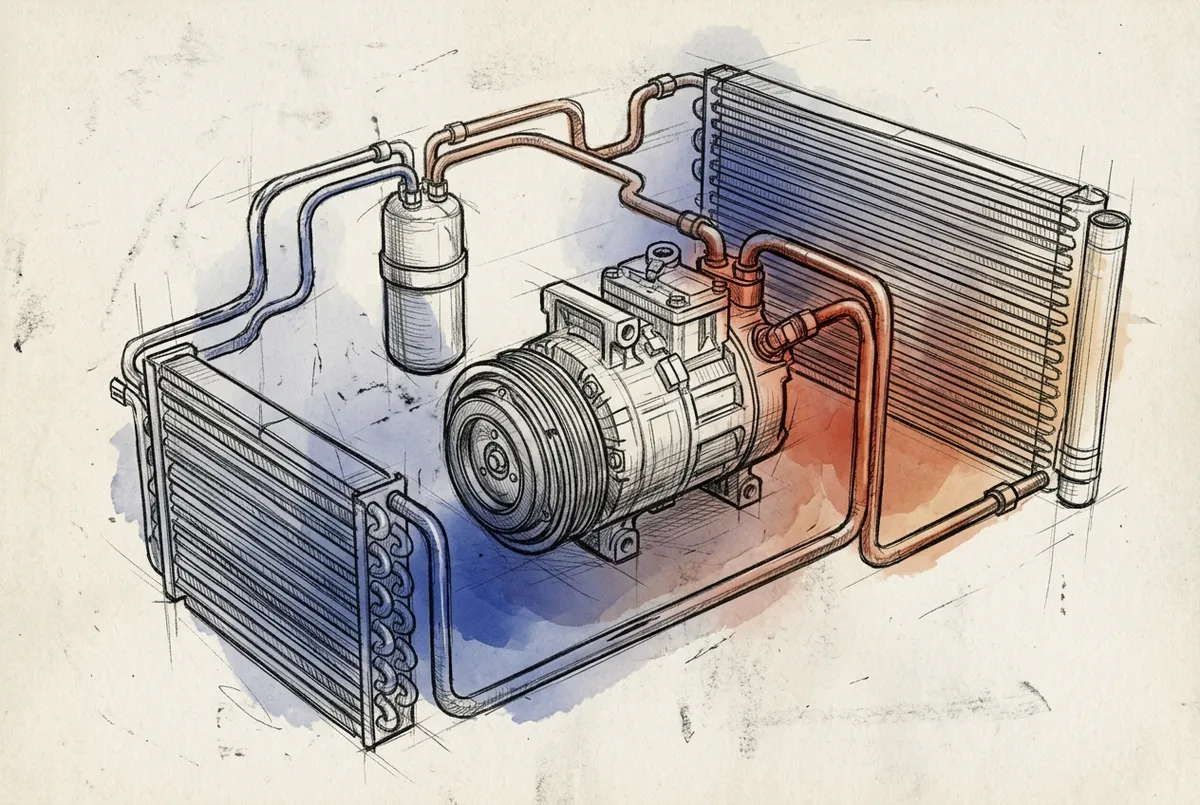
The compressor is the heart of your A/C system and pressurizes refrigerant throughout; failing compressors show warm air, grinding noises, and refrigerant leaks requiring immediate professional attention.
-
Replace the receiver-drier whenever your A/C system is opened for major repairs to prevent moisture-related corrosion and repeat failures—skipping this step is a common mistake that leads to costly problems.
-
Refrigerant line leaks cause gradual cooling loss and are the most common A/C failure; Tampa's heat accelerates hose degradation, making annual inspections critical preventive maintenance.
-
Choose OEM or OEM-equivalent quality parts from trusted brands with warranties and same-day availability rather than cheap alternatives, which fail faster and damage other system components.
-
Different vehicle types need specialized A/C parts: trucks require rugged compressors for vibration stress, buses need multiple evaporator units, and heavy equipment demands the most extreme-environment-rated components.
-
Musty smells from your vents indicate evaporator mold buildup or receiver-drier moisture issues; these problems require professional service since evaporators are labor-intensive and expensive to access and repair.
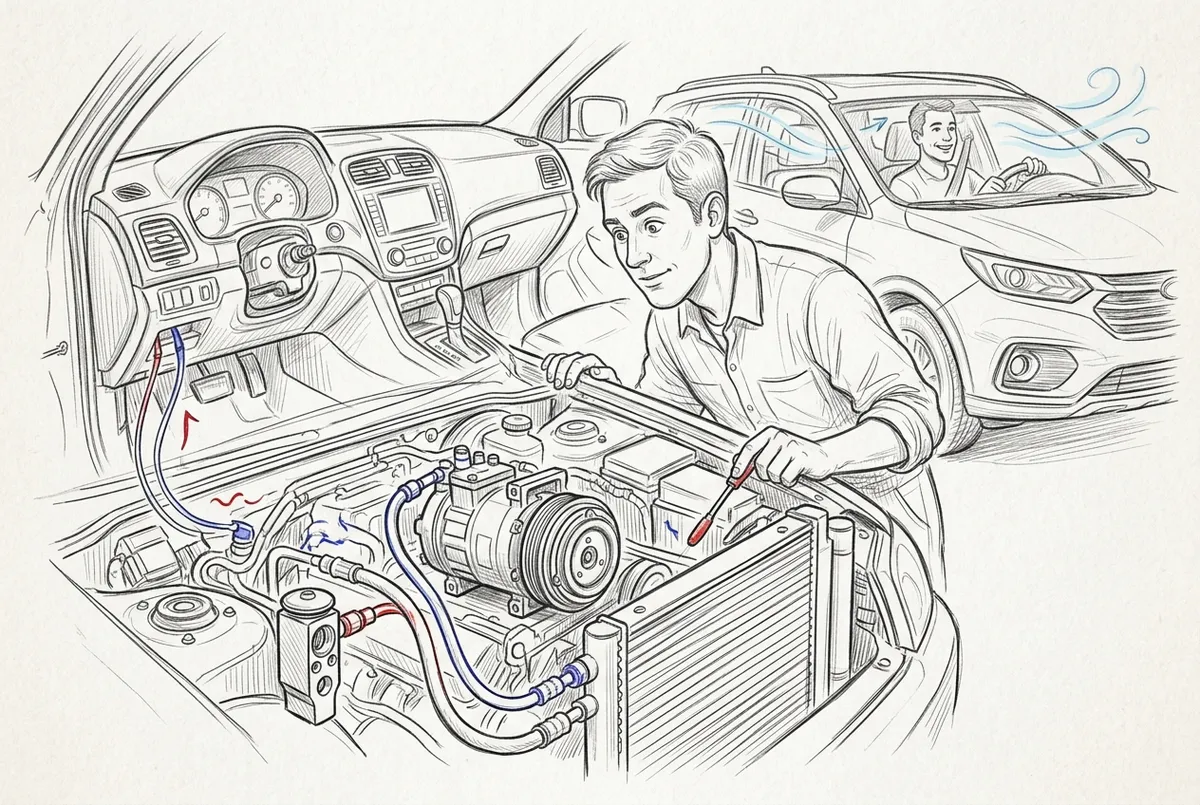
Your vehicle’s air conditioning system is one of the most important comfort features you rely on — especially in Tampa’s intense heat. But when something goes wrong, it can feel overwhelming trying to figure out what’s actually broken. The good news? Most A/C problems come down to just a handful of key A/C parts. Once you understand what each one does, diagnosing issues becomes a lot less mysterious.
Whether you drive a personal car, manage a fleet of buses, operate heavy equipment, or live the RV life, your A/C system works on the same basic principles. The parts may be bigger or more rugged depending on the vehicle, but the core components are remarkably similar. In this guide, we’ll walk you through the six most important A/C parts, what they do, and the signs that one might be failing. Let’s keep things cool!
Why Understanding A/C Parts Matters
The global automotive HVAC market is valued at USD 62.53 billion in 2026 and is projected to reach USD 80.62 billion by 2031. That kind of growth tells you how critical vehicle A/C systems have become worldwide. And with Tampa’s climate, skipping a functional A/C system simply isn’t an option.
Knowing your A/C parts helps you have smarter conversations with your technician, spot problems early, and avoid paying for repairs you don’t need. It also helps you understand why quality parts matter — cheap components tend to fail faster and can damage other parts of the system. For a reliable source of quality A/C parts in Tampa, it helps to work with specialists who stock trusted brands and know the difference between a quick fix and a lasting repair.
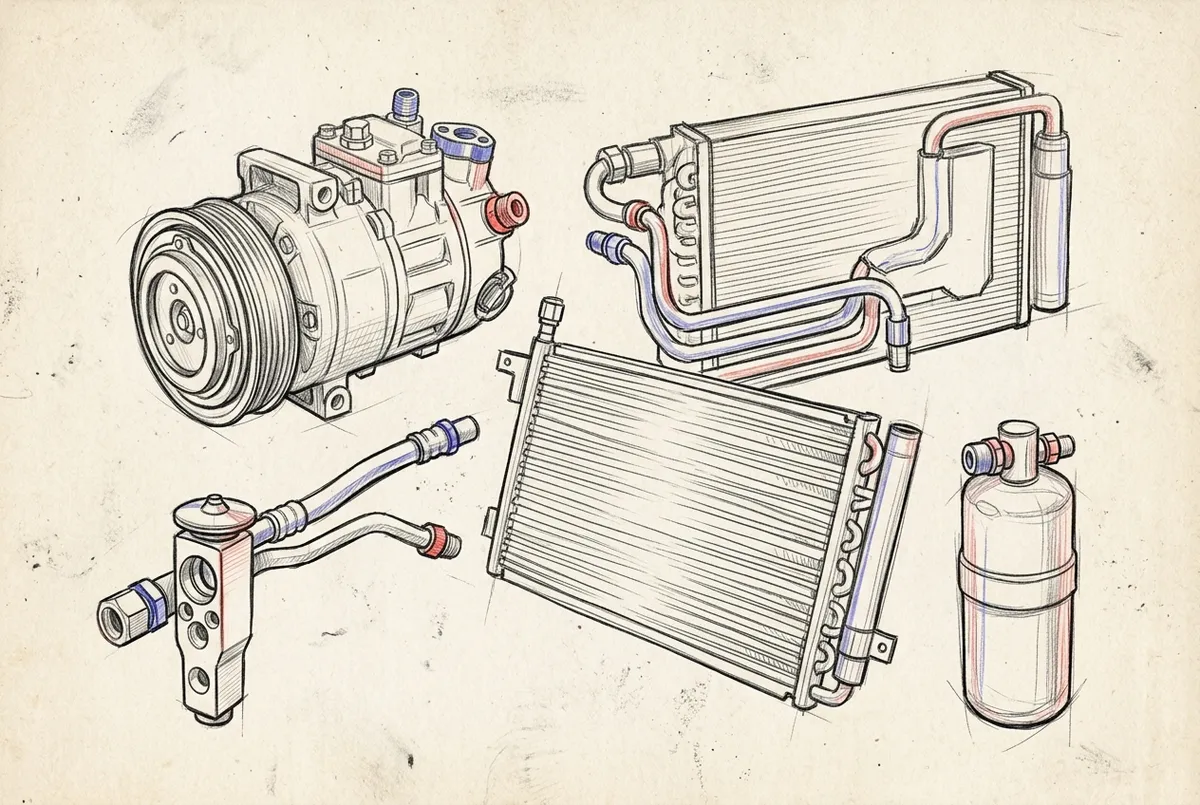
The 6 Key A/C Parts You Should Know
1. The Compressor
The compressor is often called the heart of your A/C system — and for good reason. It pressurizes the refrigerant and pumps it through the entire system. Without a working compressor, your A/C simply won’t cool the cabin at all.
Compressors are driven by a belt connected to your engine, which means they experience constant wear over time. Heavy-duty vehicles like trucks and buses require rugged compressors designed to handle high vibration environments. In fact, India’s mandate for air conditioning in heavy trucks has driven strong demand for exactly this type of heavy-duty compressor globally.
Signs your compressor might be failing include:
- Warm air blowing from the vents
- Loud clicking or grinding noises when A/C is on
- A/C clutch not engaging
- Refrigerant leaks around the compressor
2. The Condenser
The condenser looks like a small radiator and is usually located at the front of the vehicle. Its job is to release the heat that the refrigerant has absorbed from inside your cabin. Think of it as the exhaust system for your A/C — it sends the heat outside so cool air can flow in.
Because the condenser is at the front of the vehicle, it’s vulnerable to road debris, bugs, and damage from minor fender benders. A bent or clogged condenser dramatically reduces cooling efficiency. You can explore professional A/C services that include condenser inspection and cleaning as part of routine maintenance.
Watch out for these condenser warning signs:
- A/C system blowing lukewarm air
- Visible damage or bent fins on the condenser
- Overheating during idling with A/C on
- Refrigerant leaking near the front of the vehicle
3. The Evaporator
The evaporator is located inside your dashboard and does the actual work of cooling your cabin air. Refrigerant flows through it in a low-pressure liquid state, absorbing heat from the air that passes over it. The result? Cold, refreshing air through your vents.
Evaporators are tricky to access, which makes repairs more labor-intensive and expensive. Mold and mildew can also build up on the evaporator, causing musty smells when the A/C runs. If your car smells like wet socks every time you turn on the A/C, the evaporator might need attention.
Common evaporator issues include:
- Musty or mildewy odors from vents
- Reduced airflow from the dashboard vents
- Refrigerant leaks inside the dashboard area
- Frost or ice buildup on the evaporator core
4. The Expansion Valve (or Orifice Tube)
The expansion valve controls how much refrigerant flows into the evaporator. It’s a precision part that regulates pressure and temperature in the system. Some vehicles use an orifice tube instead — a simpler, fixed device that does a similar job.
Japan and South Korea are leading global exporters of high-precision electronic expansion valves, which are increasingly common in modern vehicles and EVs. A faulty expansion valve can either starve the system of refrigerant or flood it, both of which reduce cooling performance significantly.
Expansion valve failure symptoms:
- Inconsistent cooling (sometimes cold, sometimes warm)
- Ice formation on A/C lines or components
- Frost visible on the evaporator
- A/C system struggling in high heat
5. The Receiver-Drier or Accumulator
This component acts as a filter and moisture absorber for your A/C system. It removes contaminants and water from the refrigerant before it circulates through sensitive parts like the expansion valve and compressor. Moisture in an A/C system can cause serious corrosion and damage over time.
Receiver-driers and accumulators have a limited lifespan and should be replaced any time the A/C system is opened for major repairs. Skipping this step is a common mistake that leads to repeat failures — a topic covered in the helpful guide on A/C installation mistakes Tampa drivers make every summer.
Signs this part may need replacing:
- Musty smell from vents
- A/C system freezing up unexpectedly
- Reduced cooling after a recent A/C repair
- Visible moisture or oil residue on the component
6. Refrigerant Lines and Hoses
Refrigerant lines and hoses connect all the A/C components together, carrying refrigerant under both high and low pressure. They’re made to be flexible and durable, but age, heat, and road vibration cause them to crack, stiffen, or develop leaks over time.
A slow refrigerant leak from a damaged hose is one of the most common causes of gradual A/C performance decline. Tampa’s heat accelerates rubber degradation, making hose inspection a smart part of routine maintenance. You can read more about preventive care in this guide to A/C maintenance tips every Tampa vehicle owner needs.
Hose and line issues to watch for:
- Oily residue along the hose length (refrigerant oil leak)
- Visible cracks, bulges, or brittleness in the hose
- Gradual loss of cooling power over weeks or months
- Low refrigerant readings during diagnostics
A/C Parts Comparison: What Fails Most Often
To help you visualize how these parts compare in terms of failure frequency and repair complexity, here’s a handy summary table:
| A/C Part | Failure Frequency | Repair Complexity | Impact on Cooling |
|---|---|---|---|
| Compressor | High | Moderate to High | Total loss of cooling |
| Condenser | Moderate | Moderate | Reduced cooling efficiency |
| Evaporator | Low to Moderate | High (dashboard access) | Poor cabin cooling |
| Expansion Valve | Moderate | Moderate | Inconsistent performance |
| Receiver-Drier | Moderate | Low | Moisture damage to system |
| Refrigerant Lines | High | Low to Moderate | Gradual cooling loss |
How Vehicle Type Affects A/C Parts Needs
Not all vehicles put the same demands on their A/C systems. Here’s a quick breakdown of how needs vary by vehicle type:
- Personal Cars: Standard parts with regular replacement intervals. Heat and humidity in Tampa accelerate wear, so annual checks are smart.
- Trucks and Long-Haul Vehicles: Compressors and hoses face extra stress from vibration and long run times. Fleet operators benefit from bulk parts sourcing and scheduled maintenance.
- Buses and Transit Vehicles: Larger systems with multiple evaporator units. Passenger comfort depends on every component working perfectly, making regular inspections critical.
- RVs and Specialty Vehicles: Often combine roof-mounted A/C units with cab systems. Parts sourcing can be challenging for older or custom-built RVs.
- Heavy Equipment and Construction Machinery: Extreme environments demand the most rugged parts available. Operators in construction and agriculture can’t afford downtime from A/C failures in peak summer heat.
- Vehicle Fleets: Fleet owners benefit most from stocking commonly needed parts on-site and building a relationship with a trusted supplier who offers same-day availability.
What to Look for in Quality A/C Parts
Choosing the right parts makes a big difference in how long your repair lasts. Here’s what to prioritize when sourcing A/C parts:
- OEM or OEM-equivalent quality: Parts that meet or exceed original equipment specs perform more reliably and last longer.
- Trusted brand names: Brands like SPAL, ACT, BCC, gpd, and Omega have proven track records in the industry.
- Same-day availability: Downtime is costly. Working with a supplier who stocks parts locally saves hours — and sometimes days.
- Warranty coverage: Quality parts come with warranties. If a supplier doesn’t offer one, that’s a red flag.
Marks Air stocks a comprehensive line of A/C parts including its own KOOL-TEMP parts line, with same-day availability on many items. That means less waiting and more driving in comfort. You can also schedule a service appointment if you’re not sure which parts your system needs — their team can diagnose the issue and recommend the right solution.
A/C Parts and the Rise of Electric Vehicles
Electric vehicles are changing the A/C parts landscape in interesting ways. Traditional belt-driven compressors are being replaced by electrically driven units, and integrated heat-pump modules are becoming standard. China’s new energy vehicle requirements are pushing manufacturers to develop systems that work efficiently in temperatures as low as -20°C.
Even as vehicle technology evolves, the core principles of refrigerant-based cooling remain the same. Whether you’re driving a gas-powered truck or an EV, quality parts and expert installation are still what determine whether your A/C keeps you comfortable on the hottest Tampa days. You can learn more about proper A/C installation in this guide on why A/C repair in Tampa is so important for your vehicle.
Finding Reliable A/C Parts and Service in Tampa
Finding trustworthy parts and service doesn’t have to be stressful. Marks Air has been serving Tampa since 1971 as a family-owned, woman-owned A/C specialist with deep expertise in vehicles and heavy equipment of all kinds. They’re a proud member of the Mobile Air Climate Systems Association (MACS), which means they stay current with the latest industry standards and best practices.
You can check out real customer experiences on Yelp or follow along on Facebook for tips, updates, and community conversations about keeping your vehicle cool. And if you want to see what Tampa drivers are saying, visit the Marks Air Google Business Profile to read reviews from real customers across all vehicle types.
For technicians who want to sharpen their skills, Marks Air also offers A/C training programs including EPA 609 certification and HFO-1234yf training — keeping professionals up to speed with the latest refrigerant technologies.
Conclusion
Understanding the six key A/C parts in your vehicle — compressor, condenser, evaporator, expansion valve, receiver-drier, and refrigerant lines — gives you the knowledge to catch problems early and make smarter repair decisions. Whether you’re a car owner, fleet manager, RV traveler, or heavy equipment operator, these components are what stand between you and a sweltering drive through Tampa’s summer heat.
Quality parts, expert installation, and regular maintenance are the three pillars of a reliable A/C system. Don’t wait for a total breakdown to take action. If you’ve noticed any of the warning signs mentioned in this article, it’s time to get things checked out. Give Marks Air a call at 813-988-1671 or schedule your service appointment today — and enjoy the cool, comfortable ride you deserve.
FAQs
Q: What are the most important A/C parts in a vehicle?
A: The six most critical A/C parts are the compressor, condenser, evaporator, expansion valve, receiver-drier, and refrigerant lines. Each one plays a specific role in cooling your cabin, and a failure in any one of them can reduce or completely knock out your A/C performance. Getting a professional diagnostic is the best way to pinpoint exactly which part needs attention!
Q: How often should vehicle A/C parts be inspected or replaced?
A: Most A/C experts recommend a full system inspection at least once a year — especially before summer hits in hot climates like Tampa. Refrigerant lines, hoses, and the receiver-drier tend to wear faster than other components and may need replacing every few years depending on usage. Catching small issues early saves you from bigger, costlier repairs down the road.
Q: Can I use aftermarket A/C parts instead of OEM parts?
A: Yes, quality aftermarket parts from trusted brands like SPAL, gpd, and Omega can perform just as well as OEM parts — sometimes even better for specific applications. The key is sourcing from a reputable supplier who stands behind the parts with a warranty. Cheap, unknown-brand parts may save money upfront but often fail sooner and can damage other components in the system.
Q: Why is my vehicle’s A/C blowing warm air even after a recharge?
A: Warm air after a recharge usually points to a leak somewhere in the system — often a cracked hose, a failing compressor seal, or a damaged condenser. A recharge adds refrigerant, but if the leak isn’t fixed, the refrigerant escapes again quickly. A professional A/C diagnostic can locate the leak and identify exactly which part needs to be repaired or replaced.
Q: Are A/C parts for trucks and heavy equipment different from car parts?
A: Yes! Trucks, buses, heavy equipment, and RVs require more rugged A/C parts designed to handle greater vibration, longer run times, and harsher operating conditions. Compressors for heavy-duty vehicles are built to withstand high-stress environments, and hose fittings are often custom-fabricated for larger systems. Working with a specialist who understands these specific needs — like the team at Marks Air — makes a big difference in repair quality and longevity.