
Key Takeaways
-
Choose a shop whose technicians hold EPA Section 609 certification, which is legally required for anyone servicing vehicle A/C systems for pay, and ask them to confirm it upfront.
-
A good shop finds and fixes the root cause, such as a refrigerant leak, rather than just adding refrigerant, since low refrigerant usually signals a leak somewhere in the system.
-
Confirm which refrigerant your vehicle uses (R-12, R-134a, or HFO-1234yf) before service, because these refrigerants and their equipment are not interchangeable.
-
Insist on a written estimate and a clear step-by-step process, with no work starting until you approve it, and ask about the warranty on the repair.
-
Match the shop to your vehicle type, since cars, fleets, buses, RVs, and heavy equipment have very different A/C systems and downtime concerns.
-
Read online reviews for patterns such as clear communication and first-time fixes rather than relying on star ratings alone.
There is nothing quite like the moment your car’s air conditioner quits on a hot Tampa afternoon. One minute you are cruising along, and the next you are sweating through your shirt and wondering who to call. We have all been there, and the good news is that finding the right auto ac repair shop does not have to feel stressful.
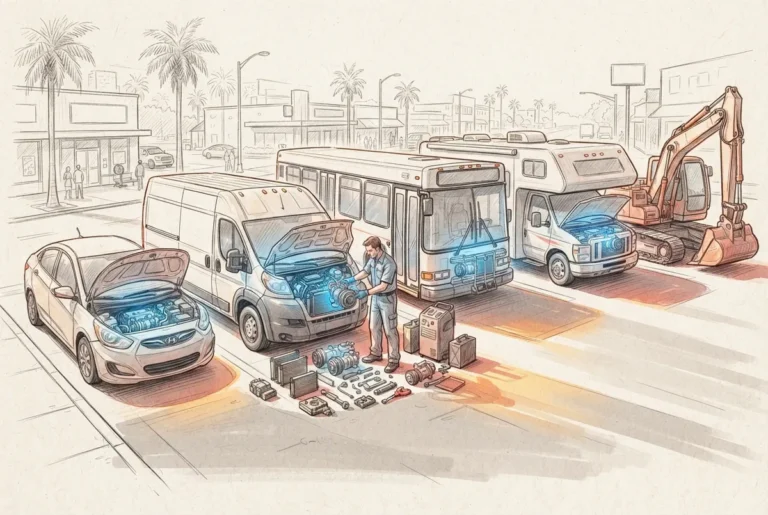
Whether you drive a family sedan, a delivery truck, a city bus, an RV, or a piece of heavy equipment, you deserve a shop that finds the real problem and fixes it once. In this friendly guide, we will walk you through exactly how to pick a shop you can trust in 2026. You will learn what certifications matter, what a good repair process looks like, and which questions to ask before you hand over your keys.
Think of this as a quick chat with a neighbor who has seen a lot of A/C systems over the years. Let’s get you back to cold air and happy driving.

Step 1: Know What an Auto AC Repair Shop Actually Does
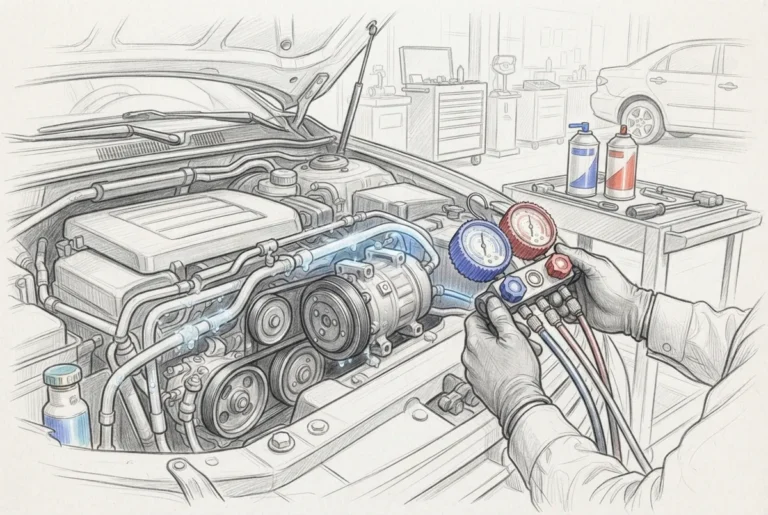
Before you start calling around, it helps to know what a good shop should offer. An auto ac repair shop diagnoses and services your vehicle’s climate-control system. That includes much more than adding a can of refrigerant.
A full-service shop should handle these jobs:
- Refrigerant recovery and recharge
- Leak detection and repair
- Compressor, condenser, and evaporator service
- Hose and line repair or fabrication
- Expansion device and blower motor service
- Full system installation, upgrades, and replacements
If a shop only talks about “topping off” your system, that is a gentle red flag. Good shops look for the cause of the problem first. For a deeper look at what to expect, check out 14 Things to Look for in a Car AC Repair Shop (2026).

Step 2: Understand Why Your A/C Is Blowing Warm
Warm air does not always mean low refrigerant. Many different problems can cause weak or warm airflow, and a smart shop will check them all. Knowing the common causes helps you ask better questions.
| Symptom | Possible Cause | What a Shop Should Do |
|---|---|---|
| Warm air from vents | Refrigerant leak or failing compressor | Run leak detection and test compressor |
| Weak airflow | Clogged cabin filter or bad blower motor | Inspect filter and blower |
| Strange noises | Worn compressor or clutch | Inspect and test the compressor |
| Air blows hot on one side | Blend door or electrical fault | Diagnose controls and doors |
| Musty smell | Moisture or dirty evaporator | Inspect and clean the system |
Want to dig into the warm-air problem further? Our Tampa readers often find Why Is Your Car A/C Blowing Warm Air in Tampa? super helpful.
Step 3: Check for EPA Section 609 Certification
This one is a big deal. In the United States, any technician who services motor vehicle A/C systems for pay must hold EPA Section 609 certification. This rule applies no matter which refrigerant the vehicle uses.
The shop must also use approved refrigerant-handling equipment. Shops are required to certify their equipment with the EPA and keep records on-site for three years. Those records include technician certifications and where recovered refrigerant went.
So, when you call a shop, ask a simple question: “Are your technicians EPA 609 certified?” A trustworthy shop will say yes right away and be proud to tell you about it.
Step 4: Ask About Refrigerant Types
Not all cars use the same refrigerant. Older vehicles may use R-12, many cars from the mid-1990s onward use R-134a, and newer models use HFO-1234yf. These refrigerants and their service equipment are not interchangeable.
Here is a quick comparison to keep things simple:
| Refrigerant | Typical Use | GWP (EPA Fact Sheet) |
|---|---|---|
| CFC-12 (R-12) | Older legacy vehicles | Very high |
| HFC-134a (R-134a) | Many vehicles from the mid-1990s on | 1,430 |
| HFO-1234yf | Newer vehicles | 4 |
EPA rules set a global-warming-potential limit of 150 for light-duty passenger vehicles starting with model year 2025. Existing vehicles can still be serviced with R-134a. Your shop should identify the exact refrigerant your vehicle needs before touching anything. To learn more, see HFO-1234yf Refrigerant for Fleets: What You Need to Know.
Step 5: Look for a Clear, Honest Process
A great shop is not shy about showing you how it works. You should know what happens from the moment you drop off your vehicle until you drive away.
Here is what a solid repair process looks like:
- Schedule and drop off. You book a time and bring the vehicle in.
- Inspect. The shop tests many points of your A/C system, not just one.
- Recommend and estimate. You get a clear recommendation, a written estimate, and a timeframe. No work starts until you say yes.
- Repair. The shop replaces only what is needed, using the right parts.
- Re-check. The technician tests the system again to confirm the fix.
- Back on the road. You drive off with cold air and a warranty.
At Marks Air, this is the heart of our 25-Point Cool Check, and most repairs come with a one-year warranty. You can read more about how a good visit should go in Car AC Servicing Near Me: What to Expect in Tampa.
Step 6: Be Wary of the Quick Recharge
Refrigerant is not a regular consumable like oil. If your system is low, there is usually a leak somewhere. Adding more refrigerant might bring back cold air for a little while, but the real problem stays hidden.
A quick recharge can also be illegal if it involves venting. EPA rules prohibit intentionally releasing refrigerant into the air. It must be recovered with approved equipment and recycled or reclaimed before reuse.
A good shop will find the leak first, fix it, and then recharge the system to the correct level. If you are tempted by a do-it-yourself can from the store, read DIY Fix vs. Pro Repair: Which Saves Your AC Compressor? before you decide.
Step 7: Match the Shop to Your Vehicle Type
Not every shop works on every kind of vehicle. A car sedan and a transit bus have very different systems, so it pays to find a shop with real range.
Cars and Light Trucks
If you drive a daily commuter, you want a shop that can diagnose quickly and get you back on the road. Fast, accurate service matters when you rely on your car every day.
Fleets, Buses, and Commercial Trucks
Fleet owners and transit operators need a partner who understands downtime. Every day a vehicle sits idle costs money. Look for a shop that stocks common parts and handles hose fabrication in-house. Our guide on Preventive vs. Reactive Fleet AC Maintenance: Which Wins? shows how planning ahead saves real money.
RVs and Heavy Equipment
RV owners and equipment operators often have unusual systems. Ask the shop if it has experience with your exact setup. Operator comfort also affects safety, so reliable A/C on a job site is no small thing.
Step 8: Ask About Parts and Availability
Parts matter. A shop with a deep inventory can often finish your job the same day instead of making you wait for a delivery. Ask if the shop stocks quality components and whether it can source hard-to-find items.
Marks Air carries a full line of A/C parts, including our KOOL-TEMP line and trusted brands such as SPAL, ACT, BCC, GPD, and Omega. We can also source from a catalog of more than 100,000 A/C parts. If you are a technician hunting for components, take a look at Where Can You Find the Best AC Parts Shop Near Me?
Step 9: Read Reviews the Smart Way
Online reviews can tell you a lot, if you know how to read them. Do not just look at the star rating. Look for patterns.
- Do customers mention clear communication?
- Do reviews say the problem was fixed the first time?
- Does the shop respond politely to complaints?
- Are the reviews recent and spread out over time?
You can see what customers say about us by reading our reviews on Yelp, or by checking our Marks Air location on Google to see feedback from fellow Tampa drivers. For more tips, try AC Repair Shops Near Me Reviews: How to Read Them Right.
Step 10: Look for Experience and Industry Ties
Experience counts in A/C work. Systems can be tricky, and a shop that has seen it all will diagnose faster and avoid unneeded repairs. A shop that focuses only on A/C tends to know its stuff.
Marks Air has served Tampa since 1971 as a family-owned, woman-owned business. We are also a member of the Mobile Air Climate Systems Association (MACS), which keeps us in step with industry standards. Want to know more about our story? Visit About Marks Air.
Step 11: Compare Costs Without Chasing the Cheapest Deal
Price matters, but the lowest quote is not always the best deal. A cheap fix that fails in a month costs more in the long run. Ask for a written estimate that explains each part and the labor involved.
Costs vary with the vehicle, the failed part, and the refrigerant type. To get a feel for current numbers, see How Much Does Auto AC Repair Cost in 2026? You may also like 14 Ways to Get Affordable Car AC Repair in Tampa for smart money-saving ideas.
Quick Checklist Before You Book
Here is a simple list to keep handy when you call a shop:
- Are the technicians EPA 609 certified?
- Do you identify my vehicle’s refrigerant before service?
- Will I get a written estimate before work begins?
- Do you find leaks before recharging?
- What warranty comes with the repair?
- Do you work on my type of vehicle?
If a shop answers these questions clearly and kindly, you are likely in good hands. You can also browse our A/C services page to see the full range of what we do.
Ready for Cold Air Again?
Choosing an auto ac repair shop comes down to a few simple things: proper certification, honest communication, the right parts, and real experience with your kind of vehicle. When you ask good questions and watch for clear answers, you will spot the right shop quickly.
At Marks Air, we have kept Tampa vehicles cool since 1971, and we would love to help you too. Schedule service online, or call us at 813-988-1671 to bring your car, truck, bus, RV, or equipment in. Stay cool out there!
FAQs
Q: How do I know if my car’s A/C needs repair?
A: Watch for warm air, weak airflow, strange noises, or odd smells when the A/C is on. If you notice any of these, it is time for a proper diagnosis. Catching problems early often keeps the repair smaller and cheaper.
Q: Does low refrigerant mean my car has an A/C leak?
A: Most of the time, yes. Refrigerant is not used up like fuel, so a low charge usually points to a leak somewhere in the system. A good shop will find and fix the leak before recharging.
Q: Can I recharge my car A/C myself, or should I visit a repair shop?
A: A store-bought can might give you short-term cooling, but it does not fix the cause and can lead to overcharging. A certified shop uses approved equipment to recover refrigerant, find leaks, and fill your system to the exact level it needs.
Q: What is the difference between R-134a and R-1234yf, and can they be mixed?
A: R-134a is common in many older vehicles, while R-1234yf is used in newer models and has a much lower global warming potential. They are not interchangeable and should never be mixed, so your shop must use the refrigerant and equipment your vehicle calls for.
Q: What happens during an auto A/C diagnostic and repair?
A: The shop inspects and tests your system, then gives you a clear estimate before any work starts. After the repair, the technician re-checks the system to make sure it cools properly. Good shops also back their work with a warranty.
Our Service Area