
Key Takeaways
-
Don't settle for a quick recharge alone: if your A/C keeps needing refrigerant, it likely has a leak, and recharging without finding it gives only temporary cold air while refrigerant escapes.
-
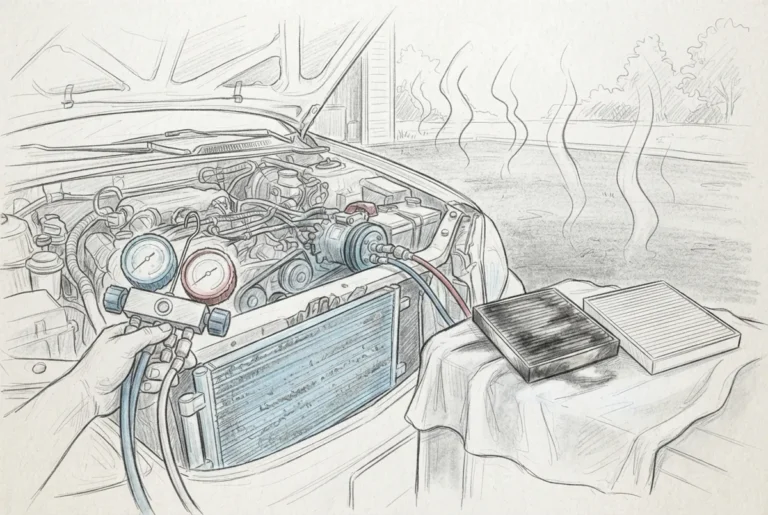
Ask for a diagnosis before any repair, since warm air can come from low refrigerant, a bad compressor, a clogged condenser, an electrical fault, or even a dirty cabin air filter.
-
Expect national averages around $430–$521 for a standard A/C service with recharge and leak inspection in 2026, and confirm whether any advertised low price includes leak testing and parts.
-
Confirm the shop's technicians are EPA Section 609 certified and that they service your vehicle's refrigerant type, which may be R-134a or R-1234yf depending on the vehicle.
-
Get a written estimate that covers diagnosis, parts, labor, and taxes, approve work before it starts, and ask about the warranty on the repair.
-
Protect your system between visits by running the A/C for a few minutes weekly, replacing the cabin air filter on schedule, keeping the condenser clear of debris, and getting a check before summer.
It’s a hot Tampa afternoon. You hop in your car, crank the A/C, and out comes warm, stale air. We’ve all been there! Your first move is probably to grab your phone and type “repair ac near me.” That’s a smart start. But with so many shops out there, how do you pick the right one?
Here’s the good news: finding great repair ac near me help for your vehicle doesn’t have to feel scary. A car’s A/C system is a sealed, complex setup. Weak cooling can come from a simple clogged filter or from a refrigerant leak or a failed compressor. A good shop figures out the real cause before it fixes anything.
In this friendly guide, we’ll walk through what “near me” really means for auto A/C, what problems to watch for, what repairs cost in 2026, and the questions to ask before you book. Whether you drive a sedan, a semi, a bus, or an RV, you’ll leave knowing exactly how to get cold air back.

What Does “Repair AC Near Me” Mean for Your Vehicle?
When you search for “repair ac near me” for a car, truck, bus, or RV, you’re looking for a nearby shop that can diagnose and fix your vehicle’s air conditioning system. This is not the same as home or building HVAC. Vehicle systems run on engine power, handle constant vibration, and use specific refrigerants and tools.
That’s why a specialist matters. Marks Air has focused only on A/C systems for vehicles and heavy equipment since 1971. That narrow focus means technicians see the same problems again and again, and they know how to spot them fast.
Who Needs Auto A/C Repair?
Lots of drivers search for this. Here are the most common groups:
- Everyday car owners who want comfort during the Florida summer
- Truck drivers and fleet managers who can’t afford downtime
- Bus and transit operators who keep passengers safe and cool
- RV owners who rely on cooling during long trips and camping
- Heavy equipment operators who work outside in the sun all day

Signs It’s Time to Search for A/C Repair
Your car often gives hints before the A/C quits completely. Catching them early can save you money. If you want a deeper dive, our guide on 5 signs you need car AC repair near me covers more.
Watch for these common warning signs:
- Warm or weak airflow from the vents
- Cooling that comes and goes
- Strange noises from the compressor or belt
- Musty or unpleasant smells inside the cabin
- Visible oily residue near A/C lines, which can point to a refrigerant leak
Here’s an important point. These symptoms alone do not tell you which part failed. Low refrigerant, a bad compressor, a clogged condenser, an evaporator problem, an electrical fault, or even a dirty cabin air filter can all cause similar signs. That’s why proper testing beats guessing every time. You can read more in our post on 10 reasons your AC is blowing warm air.
Should You Recharge or Get a Leak Check?
This is one of the biggest questions drivers ask. A vehicle A/C system is designed to be sealed. In other words, it shouldn’t lose refrigerant over time. If your system keeps needing a recharge, there is probably a leak somewhere.
Adding refrigerant without finding the cause may give you cold air for a few days or weeks. Then the problem comes right back. Worse, that refrigerant can escape into the air. According to the EPA, R-134a has a global-warming potential about 1,400 times that of carbon dioxide, so fixing leaks the right way matters for the planet too.
A smart shop looks for the leak first. Our article on 13 AC leak mistakes that cost car owners more money shows what to avoid.
What Happens During a Proper A/C Diagnosis?
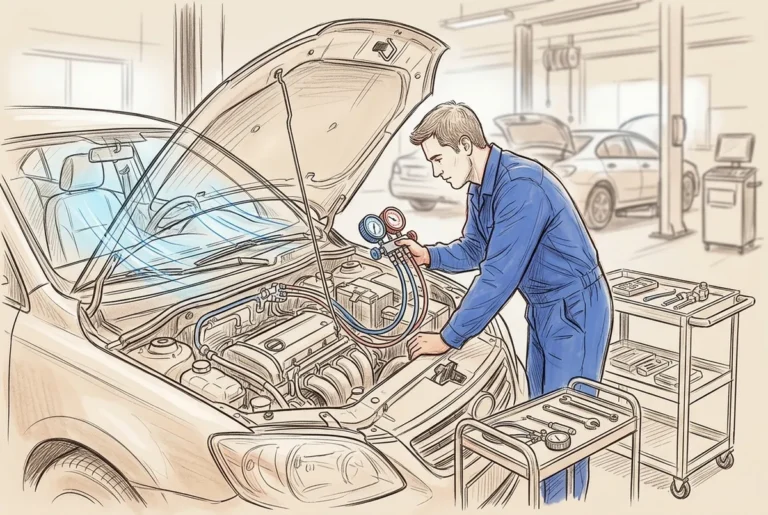
A good diagnostic visit is more than a quick pressure check. The exact steps depend on your vehicle and symptoms, but a thorough process often includes:
- Checking system pressures and temperatures to see how the system is performing
- Inspecting parts and controls, including the compressor, condenser, hoses, and electrical connections
- Recovering and weighing the refrigerant using approved equipment
- Finding leaks with the right detection methods
- Giving you a clear estimate before any repair starts
- Testing the system again after repair to confirm it works
At Marks Air, this follows a simple, proven approach called the 25-Point Cool Check. The team inspects and tests more than 25 points of your A/C system, then gives you a written estimate and timeframe. No work starts until you approve it. After the repair, the technician runs the full checklist again to make sure everything is cool and verified. Most repairs are backed by a one-year warranty.
How Much Does Car AC Repair Cost in 2026?
Let’s talk money, because that’s what most people worry about. Prices vary by vehicle, location, and the work needed. Here are some national estimates to give you a rough idea:
| Service | Typical National Estimate |
|---|---|
| Standard A/C service (recharge plus leak inspection) | About $430–$521 (ConsumerAffairs, 2026) |
| A/C recharge only | About $285–$369 (RepairPal estimate) |
| Leak inspection | About $122–$179 (RepairPal estimate) |
Remember, these are national averages, not guaranteed local quotes. Bigger repairs, like a new compressor or evaporator, cost more. For a closer look, see our guide on how much auto AC repair costs in 2026 and our breakdown of car AC diagnostic costs.
One more tip. A super low advertised recharge price may not include leak testing or repairs. Always ask what’s included before you say yes.
What Refrigerant Does Your Vehicle Use?
Not every car uses the same refrigerant. Many older vehicles use R-134a. Newer vehicles often use R-1234yf. The right type and charge amount should come from the label under your hood or from official service information.
Refrigerants and service equipment are not interchangeable by assumption. A shop that guesses can damage your system or break the rules. If you’re curious about the shift between the two types, check out our post on R-134a to 1234yf conversion and our guide to HFO-1234yf refrigerant for fleets.
Why EPA Certification Matters
In the United States, technicians who service motor-vehicle A/C systems for pay must hold EPA Section 609 certification. They must also use approved refrigerant-handling equipment. Venting refrigerant on purpose is prohibited, and recovered refrigerant must be recycled or reclaimed before reuse. When you shop around, it’s fair to ask whether the technicians are certified. You can learn more about the rules on the EPA’s motor vehicle A/C servicing requirements page.
Questions to Ask Before You Book
Think of this as your quick checklist. A friendly, honest shop will be happy to answer every one:
- Does the estimate include diagnosis, leak testing, refrigerant, parts, labor, and taxes?
- Does the shop service my vehicle’s refrigerant type?
- Are your technicians EPA 609 certified?
- What warranty comes with the repair?
- Will you call me for approval before doing extra work?
Our post on how to find the best car AC service near me goes even deeper, and you can also learn what to avoid in 10 auto AC repair mistakes that cost you more money.
Comparing Your Options: A Quick Look
| What to Compare | Why It Matters |
|---|---|
| Specialization | A shop that only does A/C sees more problems and solves them faster |
| Diagnostic approach | Testing finds the real cause instead of masking it with a recharge |
| Parts availability | Same-day parts mean less time without your vehicle |
| Warranty | Shows the shop stands behind its work |
| Reviews and history | Real customer feedback shows how the shop treats people |
Why Local Experience Makes a Difference in Tampa
Tampa heat is no joke. High temperatures and humidity push A/C systems hard, which is why parts wear out faster here. A local shop understands those conditions. Marks Air is a family-owned, woman-owned business that has served Tampa since 1971, so the team has seen what Florida summers do to cars, trucks, buses, RVs, and heavy equipment.
For fleets, this experience matters even more. Downtime costs money. Our tips in 4 fleet vehicle AC repair tips that save you money can help managers plan smarter.
The shop is also a member of the Mobile Air Climate Systems Association (MACS), which helps it stay current with industry standards. Parts are another plus. Marks Air stocks its KOOL-TEMP line plus trusted brands, with many items available the same day, and can source from over 100,000 A/C parts. Need a part and don’t have the part number? Send a photo and the specialists will identify it. For technicians, the shop also offers A/C training, including EPA 609 certification.
Look for Social Proof
Before you pick a shop, take a few minutes to read what real customers say. Reviews tell you about honesty, speed, and follow-through. You can see what Marks Air customers say on Yelp, and you can read Marks Air reviews on Google too. Our own reviews page collects more kind words from drivers across the Tampa area.
Not sure how to read reviews? Our guide on how to read AC repair shop reviews makes it simple. And if you ever need help with unrelated upkeep around your property, local pros like Bucheli Trim are great folks to know in the community.
Simple Ways to Protect Your A/C Between Visits
A little care goes a long way. Try these easy habits:
- Run your A/C for a few minutes each week, even in cooler months, to keep seals lubricated.
- Replace your cabin air filter as your owner’s manual suggests.
- Keep the front of the condenser clear of leaves and debris.
- Listen for new sounds and act early.
- Get a yearly check before summer arrives.
For more ideas, see our 5 A/C maintenance tips every Tampa vehicle owner needs.
Ready to Get Cold Air Back?
Finding good repair ac near me service comes down to a few simple things: a shop that diagnoses before it repairs, uses certified technicians, gives you a clear written estimate, and stands behind its work. Skip the quick-fix recharge trap, ask smart questions, and pick a team that treats you like family.
If you’re in the Tampa area and your A/C is blowing warm air, we’d love to help. Schedule service with Marks Air today or call us at 813-988-1671. You can also follow our work on Facebook or learn more about our story. Let’s keep you cool and moving!
FAQs
Q: Where can I get my car AC repaired near me?
A: Look for a nearby shop that specializes in automotive A/C and uses EPA 609 certified technicians. In Tampa, Marks Air has been fixing car, truck, bus, RV, and heavy equipment A/C systems since 1971. You can schedule service online or call 813-988-1671.
Q: How much does car AC repair cost?
A: Costs vary by vehicle and the work needed. ConsumerAffairs (2026) reports average quotes of about $430–$521 for a standard A/C service with a recharge and leak inspection. Bigger repairs like a compressor replacement cost more, so ask for a written estimate first.
Q: Why is my car AC blowing warm air?
A: Warm air can come from low refrigerant due to a leak, a faulty compressor, a condenser or evaporator problem, an electrical fault, or even a clogged cabin air filter. Symptoms alone can’t tell you which part failed, so a proper diagnosis is the best next step.
Q: Should I recharge my car AC or have it inspected for a leak?
A: Have it inspected. A vehicle A/C system is sealed, so if it keeps needing refrigerant, a leak is likely. A recharge alone often gives only temporary relief and lets refrigerant escape.
Q: Does my car use R-134a or R-1234yf refrigerant?
A: Many older vehicles use R-134a, while newer ones often use R-1234yf. Check the label under your hood or ask a certified shop to confirm the correct type and charge amount before any service.
Our Service Area