
Key Takeaways
-
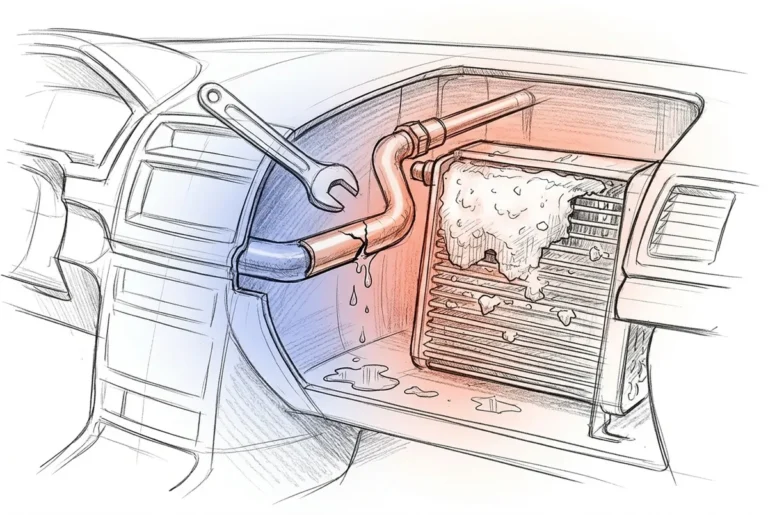
A low A/C refrigerant level almost always means a leak, since the system is sealed, so a proper service should find and fix the leak before recharging rather than just topping off.
-
Confirm whether your car uses R-134a or HFO-1234yf by checking the under-hood label or owner's manual, because the two refrigerants should never be mixed.
-
Ask any shop for a leak diagnosis, a clear explanation of test results, and an itemized written estimate before approving any work.
-
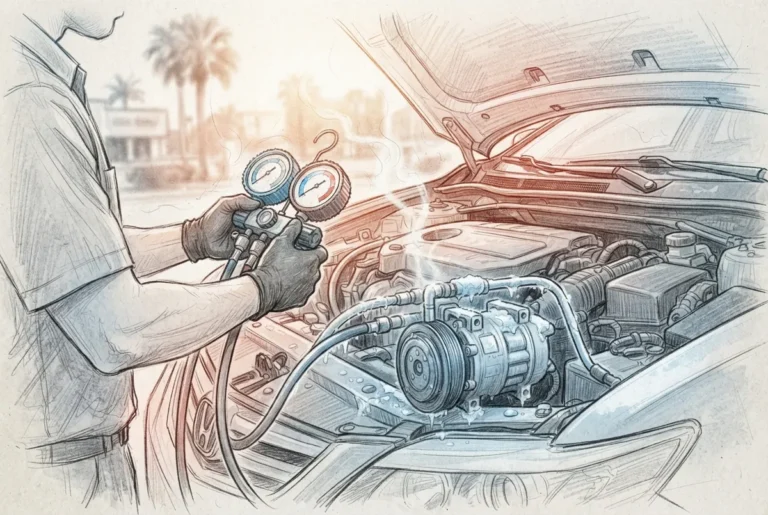
Be cautious with DIY recharge cans: without high-side gauges they can overcharge the system, and they cannot find a failing compressor, clogged orifice tube, or bad condenser.
-
Watch for warning signs like warm or weak airflow, musty odors, new clicking or squealing noises, cooling that cycles on and off, or oily residue near hoses and fittings.
-
Choose a shop with EPA Section 609 certified technicians and approved refrigerant-handling equipment, since EPA rules require proper recovery and recycling of refrigerant.
It happens to almost every driver in Tampa. You hop in the car on a sunny afternoon, crank the A/C, and get a puff of warm, sticky air. Suddenly your commute feels about ten degrees hotter. So you grab your phone and search “car ac servicing near me,” hoping to find someone who can fix it without a runaround.
Good news: you do not have to guess your way through it. A quality A/C service visit is more than a quick refrigerant top-off. It is a careful check of the whole system, an honest explanation of what is wrong, and a clear estimate before any work begins.
In this guide, we will walk through what car A/C servicing really includes, the signs it is time to book, what to ask any shop, and how the process should feel. Whether you drive a daily commuter, a pickup, a bus, or an RV, you will leave knowing how to get cold air back with confidence.

What Does Car AC Servicing Actually Mean?
When people search for car ac servicing near me, they usually mean one of three things: a check-up, a diagnosis of a problem, or a repair. It is not just “adding Freon.” A real service looks at how the entire system works together.
Your A/C is a closed loop. The compressor pumps refrigerant, the condenser releases heat, and the evaporator cools the air that blows into your cabin. If one part struggles, the whole system suffers. That is why a good technician tests the system instead of guessing.
A thorough inspection may check:
- Cabin airflow and the cabin air filter
- Compressor operation and clutch engagement
- Belts and electrical controls
- Condenser condition and airflow
- System pressures
- Refrigerant leaks at hoses, fittings, and seals
The exact tests depend on your vehicle and what symptoms you notice. If you want a quick look at what a complete visit should cover, our guide on 4 things car A/C servicing should always include is a great place to start.

Signs It Is Time to Book Service
Your car usually gives you hints before the A/C quits completely. Catching them early can save money and keep a small issue from turning into a big one.
Common reasons to book service include:
- Warm or only slightly cool air from the vents
- Weak airflow, even on the highest fan setting
- Strange smells, like a musty or sour odor
- Rattling, squealing, or clicking noises when the A/C is on
- Cooling that comes and goes
- Oily residue or wet spots near A/C hoses and fittings
If your air is blowing warm, you are not alone. Our breakdown of 10 reasons your AC is blowing warm air explains the most common culprits. And if you are not sure whether it is time to come in, these 5 signs you need car AC repair can help you decide.
Recharge or Repair? Why a Top-Off Is Not the Whole Story
Here is something many drivers do not know: your A/C is a sealed system. It should not “use up” refrigerant over time. If the level is low, there is almost always a leak somewhere.
EPA guidance recommends finding and fixing leaks before topping off a system. Adding refrigerant without a diagnosis is like pumping up a tire with a nail in it. It feels better for a little while, then it goes flat again.
A proper service may recover and recycle the old refrigerant, repair or replace the leaking part, and then recharge to the exact amount your vehicle maker specifies. EPA also notes that a few ounces of refrigerant, about 10 percent of a normal charge, may be enough to do a leak check in some cases.
Want to understand leaks better? Take a look at 12 leak detection and repair facts Tampa drivers need, or learn how to spot trouble early with our tips on detecting A/C leaks in your truck.
Know Your Refrigerant: R-134a vs. HFO-1234yf
Not all vehicles use the same refrigerant, and they are not interchangeable. Many vehicles use R-134a. Newer models often use HFO-1234yf. Mixing them, or using the wrong one, can damage equipment and create safety risks.
You can usually find out which one your car uses by checking the label under the hood or your owner’s manual. EPA notes that R-134a has a global-warming potential about 1,400 times that of carbon dioxide, which is one reason handling rules are so strict.
| Question | R-134a | HFO-1234yf |
|---|---|---|
| Typical use | Many older vehicles | Many newer vehicles |
| Where to confirm | Under-hood label or manual | Under-hood label or manual |
| Can it be mixed? | No | No |
| Shop needs | Approved equipment for this refrigerant | Approved equipment for this refrigerant |
Curious about newer systems? Read HFO-1234yf refrigerant for fleets or our overview of R-134a to 1234yf conversion.
A Word About DIY Recharge Kits
Those cans on the auto parts shelf look tempting, especially when the weather is hot and money is tight. But they come with real risks. Without gauges for the high side, you can overcharge the system. Without leak diagnosis, you may just be venting refrigerant into the air later.
A DIY kit cannot find a bad compressor, a clogged orifice tube, or a failing condenser. It also does not remove moisture from the system. For most drivers, a professional diagnosis is the safer and often cheaper path in the long run. If you are weighing it out, our DIY vs. shop price showdown lays out the numbers.
EPA Rules: Why Certification Matters
In the United States, anyone who services motor-vehicle A/C systems for payment must hold EPA Section 609 certification. Shops must also use approved refrigerant-handling equipment, certify that equipment to EPA, and keep records of technician certification.
EPA rules also prohibit intentionally venting most motor-vehicle A/C refrigerants during service. Recovered refrigerant must be recycled or reclaimed before it is put back in, even when it goes back into the same vehicle.
That is good for the environment and good for you. A certified shop is doing things by the book. Marks Air is a proud member of the Mobile Air Climate Systems Association (MACS), and we also offer A/C training for technicians who want to earn EPA 609 certification.
How to Compare Shops When You Search Near You
A quick search will give you a long list. The trick is knowing which questions separate the great shops from the so-so ones. Here is a simple checklist you can follow.
- Ask about your refrigerant. Make sure the shop can service your vehicle’s specific type.
- Ask if they diagnose leaks. A shop that only recharges is skipping the important part.
- Ask for an explanation of the test results. You should understand what they found and why.
- Get an itemized written estimate. Parts, labor, and diagnosis should be clear.
- Ask about warranty terms. A shop that stands behind its work will tell you plainly.
- Check reviews. Look for patterns, not just star ratings.
Reviews are a great window into how a shop treats people. You can read what customers say on Yelp and on our own reviews page. For more tips on picking well, see how to find the best car AC service near me.
What a Good Service Visit Looks Like
A great visit should feel clear and calm, not confusing. At Marks Air, we follow a simple process we call the 25-Point Cool Check. Here is how it works.
- Schedule and drop off. You book an appointment and bring your vehicle in.
- Inspect. We inspect and test more than 25 points of your A/C system.
- Recommend and estimate. You get a clear recommendation, a written estimate, and a timeframe. No work starts until you approve.
- Repair. We replace only what is needed, using the right parts.
- Re-check. The technician runs the full checklist again to confirm everything works.
- Back on the road. Your A/C is cool, verified, and backed by a one-year warranty on most repairs.
That last step matters. Verifying the fix before you drive away means fewer surprises later. If you would like to see the steps in more detail, check out our overview of the Marks Air process.
Cost and Timing: What to Expect
Everyone wants a number, but honest shops will tell you the price depends on several things. There is no single price that fits every car.
Costs and time usually depend on:
- Your vehicle type and age
- Which refrigerant it uses
- The time needed for diagnosis
- The parts that need replacing
- Local labor rates
A simple inspection is often quick. A repair involving a compressor, evaporator, or hoses takes longer. Rather than trusting a universal price, ask for a quote based on your exact vehicle. To get a feel for typical ranges, read how much auto AC repair costs in 2026 and 3 key facts about car AC diagnostic cost.
Service for More Than Just Cars
Your A/C does not have to be in a sedan to deserve expert care. Tampa heat is tough on every kind of vehicle, and each one has its own needs.
- Trucks and fleets: Downtime costs money, so quick diagnostics and dependable parts matter. See our tips on fleet vehicle AC repair.
- Buses and transit: Passenger comfort and safety depend on steady cooling. Learn what proper bus AC maintenance involves.
- RVs: Roadside breakdowns are no fun in the summer. Avoid common RV air conditioner repair parts mistakes.
- Heavy equipment: Operators work long hours outdoors, and a cool cab helps prevent fatigue. Read how to get heavy equipment AC repair done right.
No matter what you drive, the same basics apply: diagnose first, repair what is needed, and verify the result.
Keep Your A/C Healthy Between Visits
A little care goes a long way, especially in Florida. Run your A/C regularly, even in cooler months, so seals stay lubricated. Replace your cabin air filter on schedule. Keep the front of the condenser clear of leaves and debris.
Also, do not ignore small changes. A weaker blow or a new noise is your car asking for attention. Our guide to 5 A/C maintenance tips every Tampa vehicle owner needs has easy habits you can start today. And if you want to head off trouble before summer peaks, see how to build a preventative car AC maintenance plan.
Why Tampa Drivers Choose Marks Air
Marks Air is a family-owned, woman-owned business that has focused on vehicle and heavy equipment A/C in Tampa since 1971. That is decades of hands-on experience, and A/C is all we do. We handle diagnostics, leak detection, hose fabrication, repairs, installations, and replacements for cars, trucks, buses, RVs, emergency vehicles, and heavy equipment.
We also keep a deep inventory of parts, including our KOOL-TEMP line, so many jobs can move fast. You can learn more about Marks Air, browse our A/C services, or see our A/C parts. Want to see what neighbors say? Visit us on Google — Marks Air and read the reviews from other Tampa drivers.
Ready to Get Cold Air Back?
Finding good car ac servicing near me does not have to be stressful. Look for a certified shop, ask smart questions, expect a real diagnosis, and insist on a clear written estimate. When you do, you will drive away with cold air and peace of mind.
If your A/C is feeling off, do not wait for the hottest day of the year. Schedule service with Marks Air or call us at 813-988-1671. We would love to help you keep cool and keep moving.
FAQs
Q: Why is my car AC blowing warm air?
A: The most common cause is low refrigerant from a leak, but a failing compressor, a bad condenser, or an electrical issue can do it too. A quick diagnosis will tell you which one it is, so you are not paying to fix the wrong thing.
Q: Does my car need an AC recharge, or does it have a leak?
A: If your A/C needs a recharge, it almost always has a leak, since the system is sealed. EPA guidance recommends finding and repairing the leak before topping off, so the fix actually lasts.
Q: How can I tell whether my car uses R-134a or R-1234yf refrigerant?
A: Check the label under the hood or look in your owner’s manual. The two refrigerants should never be mixed, so it is worth confirming before any service.
Q: What does a car AC service include?
A: A good service checks airflow, the cabin filter, the compressor, belts, electrical controls, the condenser, system pressures, and leaks. At Marks Air, we test more than 25 points and give you a written estimate before any work begins.
Q: Is it safe to use a DIY car AC recharge kit?
A: It can be risky. Without proper gauges and leak diagnosis, you may overcharge the system or miss the real problem. A certified technician can find the root cause and recharge to your vehicle’s exact specification.
Our Service Area