
Key Takeaways
-
Weak cooling usually means a leak, so a simple refrigerant top-off often fails within days; a good shop diagnoses the root cause before adding any refrigerant.
-
Warm or uneven air, weak airflow, grinding or squealing noises, musty smells, oily residue near hoses, and intermittent cooling are early warning signs that call for prompt service.
-
Typical 2026 cost ranges cited in the article: A/C inspection $75–$300, leak detection $150–$500, and recharge $150–$300, with major component repairs costing more.
-
Before booking, confirm the shop works on your make and model, uses the correct refrigerant type (R-134a or R-1234yf), employs EPA Section 609 certified technicians, and provides a written estimate and warranty.
-
Refrigerant must be recovered before repairs and venting it is illegal, so a legitimate shop will have approved recovery equipment and certified staff.
-
Simple maintenance such as running the A/C weekly, replacing the cabin air filter on schedule, and getting a checkup before summer helps extend system life.
It happens fast in Tampa. You hop in your car after a long day, hit the A/C button, and get a blast of warm, sticky air. Sound familiar? When that moment hits, one search comes to mind: auto air conditioning service near me. The good news is that you are not alone, and fixing it is easier than you think.
This guide walks you through what auto A/C service really means, what a good shop checks, what it may cost in 2026, and how to pick a shop you can trust. Whether you drive a daily commuter, a delivery truck, a bus, an RV, or a piece of heavy equipment, you will find simple answers here.

What Does Auto Air Conditioning Service Actually Mean?
When people search for auto air conditioning service near me, they want a nearby shop that can inspect, diagnose, and repair a vehicle’s A/C system. This is not home HVAC work. Vehicle systems are built differently, they face constant vibration and heat, and they need specialized tools and training.
A vehicle A/C system moves refrigerant through a few key parts. Each part has a job, and any one of them can cause weak cooling.
- Compressor: Pumps refrigerant through the system.
- Condenser: Releases heat from the refrigerant, usually mounted at the front of the vehicle.
- Expansion device: Controls refrigerant flow and drops its pressure.
- Evaporator: Absorbs heat from the cabin so the air blowing out feels cold.
Want a closer look at each part? Our guide to 6 A/C parts every vehicle owner should know in 2026 breaks it down in plain language.

Signs It’s Time to Call a Local A/C Shop
Your car usually warns you before the A/C quits for good. Catching these signs early can save you money and keep you comfortable.
- Warm or uneven air coming from the vents
- Weak airflow, even on the highest fan setting
- Strange noises like grinding, squealing, or rattling when the A/C is on
- Musty or unpleasant smells from the vents
- Oily residue or visible damage around A/C hoses and parts
- Cooling that fades in and out or keeps disappearing
If you notice any of these, do not wait for a triple-digit Tampa afternoon. For a deeper list, see 5 signs you need car AC repair near me. And if the A/C simply is not blowing cold, 10 reasons your AC is blowing warm air can help you understand what may be going on.
Why a Recharge Alone Is Not Always the Answer
Many drivers think weak cooling just means the system needs more refrigerant. Sometimes that is part of the story, but often it is not the whole story. Refrigerant does not get “used up” like gas in a tank. If the level is low, there is usually a leak somewhere.
Poor cooling can come from several causes:
- Low refrigerant caused by a leak
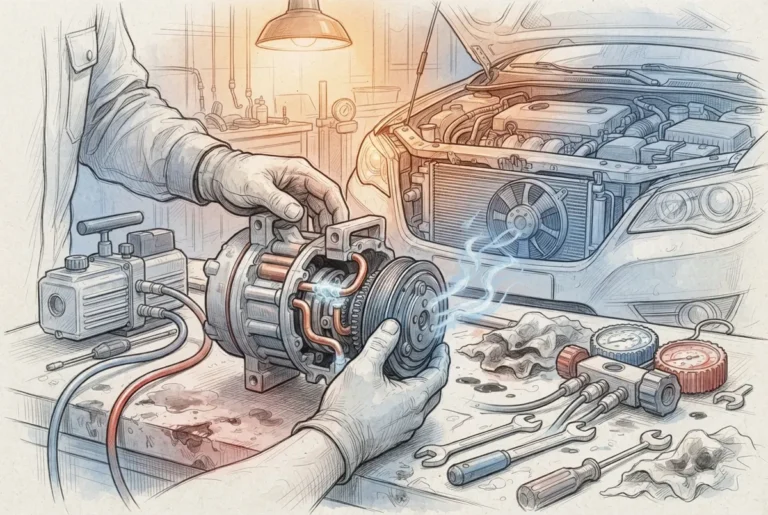
- A failing compressor or clutch
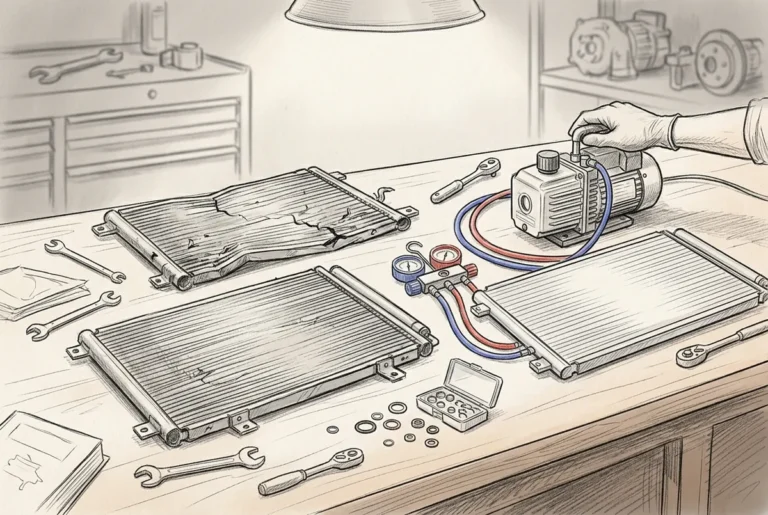
- A blocked or damaged condenser
- A clogged expansion device
- Restricted airflow, like a bad blower motor or dirty cabin filter
- An electrical or control problem, such as a bad switch, relay, or sensor
A good shop finds the real cause first. Topping off refrigerant without a diagnosis can waste money, and the cold air may vanish again in a few days. If you want to avoid expensive missteps, read 10 auto AC repair mistakes that cost you more money.
What Happens During a Professional A/C Service Visit?
The exact steps depend on your vehicle and symptoms, but a thorough visit usually covers the basics below. Here is how it works at Marks Air, where we use our proven 25-Point Cool Check.
- Schedule and drop off: Book an appointment and bring your vehicle in.
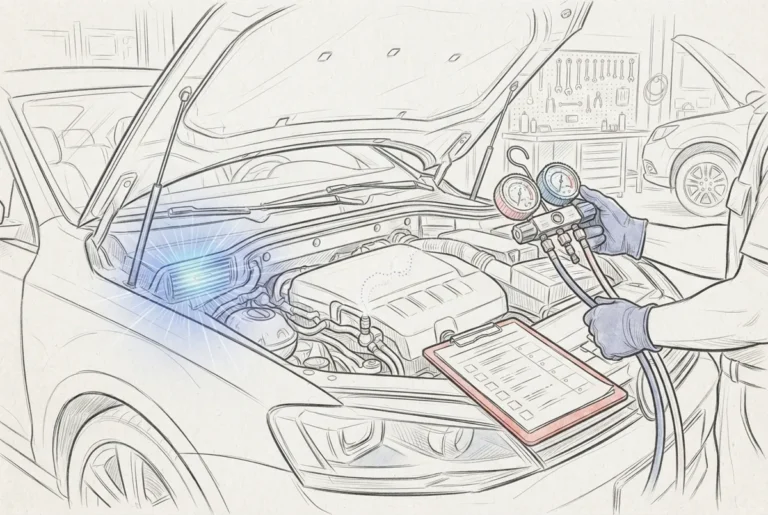
- Inspect: We inspect and test 25-plus points of your A/C system, including vent temperature, airflow, pressures, and components.
- Recommend and estimate: You get a clear recommendation, a written estimate, and a timeframe. No work starts until you approve it.
- Repair: We replace only what is needed, using the right parts.
- Re-check: The technician runs the full checklist again to confirm everything works.
- Back on the road: Your vehicle goes home cool and verified, backed by a one-year warranty on most repairs.
Leak detection is a big part of many visits. Shops may use different methods to find where refrigerant is escaping. If you suspect a leak, our article on leak detection and repair facts explains what to expect.
Understanding Refrigerant Types and EPA Rules
Not every vehicle uses the same refrigerant. Many older vehicles use R-134a, while many newer ones use R-1234yf. These refrigerants and their service equipment are not interchangeable, so a shop must have the right gear for your vehicle.
There are also federal rules. Under EPA Section 609, technicians who service motor vehicle A/C systems for payment must be certified and must use approved refrigerant-handling equipment. Refrigerant must be recovered before relevant repairs, and intentionally venting it is prohibited. Recovered refrigerant also has to be recycled or reclaimed before it goes back into a system, even the same one.
For a closer look at the newer refrigerant, check out HFO-1234yf refrigerant for fleets. Curious about older systems? See 12 things to know about R-134a to 1234yf conversion.
How Much Does Auto A/C Service Cost in 2026?
Everyone wants to know the price. The honest answer is that it depends on your vehicle, your location, the refrigerant, and what is actually wrong. One 2025 auto repair article cited the following rough ranges. These are third-party estimates, not fixed rates.
| Service | Approximate Range | What Affects the Price |
|---|---|---|
| A/C inspection or diagnostics | $75 to $300 | Vehicle type, how deep the testing goes |
| Leak detection | $150 to $500 | Leak location, method used, system access |
| Refrigerant recharge | $150 to $300 (sometimes higher) | Refrigerant type and amount |
Repairs like compressor, condenser, or evaporator replacement cost more and vary widely. For a closer look, read how much auto AC repair costs in 2026, and the helpful breakdown of car AC diagnostic cost. A written estimate before any work starts is your best protection.
How to Choose the Right Shop Near You
Typing “near me” gives you plenty of results. The trick is picking the right one. Here are smart questions to ask before you book.
- Do you work on my make and model?
- Do you handle my vehicle’s refrigerant type?
- Will you find the cause of the problem before recharging?
- Can I get a written estimate and warranty terms?
- Are your technicians EPA Section 609 certified?
It also helps to read reviews and look at how long a shop has been around. Our customer reviews are a good example of what real feedback looks like, and you can also see what drivers say on Yelp. For a full walkthrough, try how to find the best car AC service near me.
A/C Service for Trucks, Buses, RVs, and Heavy Equipment
Not everyone drives a sedan. Professional drivers and fleet managers need A/C that works hard all day, because driver comfort and safety matter on the road and on the job site.
Truck Drivers and Fleets
For long-haul trucks and commercial fleets, downtime costs money. Prompt diagnostics and the right parts keep trucks rolling. Tips like those in 4 fleet vehicle AC repair tips that save you money can help you plan smarter.
Bus and Transit Operators
Passengers expect a cool, comfortable ride, especially in Tampa’s heat. Consistent maintenance and timely repairs matter. See what proper bus AC system maintenance involves for helpful details.
RV Owners
RV cooling systems can be less common and harder to troubleshoot. Using the right parts matters, and 6 RV air conditioner repair parts mistakes to avoid can save you a headache on the road.
Heavy Equipment Operators
A hot cab leads to tired operators and slower work. Keeping A/C running protects both your crew and your schedule. Learn more in how to get heavy equipment AC repair done right.
Why Local Experience Matters
Tampa heat is no joke. High humidity, long summers, and stop-and-go traffic put a lot of stress on A/C systems. A shop that knows the area understands how these conditions wear down parts.
Marks Air is a family-owned, woman-owned business that has been serving Tampa since 1971. We focus only on air conditioning for cars, trucks, buses, RVs, emergency vehicles, and heavy equipment. We are also a member of the Mobile Air Climate Systems Association (MACS), which helps us stay current with industry standards. You can learn more about Marks Air and our A/C services.
We also stock a full line of A/C parts, including our KOOL-TEMP line, with many items available the same day. If you want to see how we show up locally, see what our Marks Air customers say on Google.
A fun note: just like finding a dentist you trust, such as the team at Dental Theory, finding the right A/C shop is all about comfort, clear communication, and feeling confident in the work.
Simple Ways to Keep Your A/C Healthy Between Visits
A little care goes a long way. These easy habits can help your system last longer.
- Run the A/C for a few minutes each week, even in cooler months
- Replace the cabin air filter on schedule
- Keep the front of the vehicle clear of leaves and debris
- Fix small problems early before they grow
- Schedule a yearly checkup before summer starts
For more ideas, see 5 AC maintenance tips every Tampa vehicle owner needs.
Ready to Get Cool Again?
Finding auto air conditioning service near me does not have to feel stressful. Look for a shop that diagnoses before it recharges, uses certified technicians, explains your options in plain language, and stands behind its work. Do that, and you will be back on the road with ice-cold air in no time.
Ready to cool things down? Schedule service with Marks Air today, or call us at 813-988-1671. We would love to help you stay cool and keep moving.
FAQs
Q: Where can I get my car air conditioning serviced near me?
A: Look for a local auto repair shop that specializes in vehicle A/C, has EPA Section 609 certified technicians, and works on your make and model. In Tampa, Marks Air has focused on A/C systems for cars, trucks, buses, RVs, and heavy equipment since 1971.
Q: How do I know if my car’s A/C needs repair or just a recharge?
A: Low refrigerant usually means there is a leak, so a recharge alone often will not last. A proper diagnosis checks pressures, components, airflow, and electrical controls to find the real cause before any refrigerant is added.
Q: How long does a car A/C service appointment take?
A: A basic inspection may be quick, while leak detection or part replacement can take longer. Your shop should give you a written estimate and a timeframe before starting any work.
Q: Can I drive my car if the air conditioner is not working?
A: In most cases, yes, since the A/C is separate from the parts that keep your engine running. But if you hear grinding noises or a belt squeals, get it checked soon, because a failing compressor can sometimes affect other components.
Q: Does my vehicle use R-134a or R-1234yf refrigerant?
A: It depends on your vehicle’s age and model. Many older vehicles use R-134a, and many newer ones use R-1234yf. Check the label under the hood or ask your A/C shop, since the two refrigerants and their service equipment are not interchangeable.
Our Service Area