
Key Takeaways
-
Topping off refrigerant without finding and fixing a leak is only a short-term fix, since refrigerant doesn't get used up like gasoline and a leak means it will keep escaping.
-
A quality service starts with a full diagnosis of performance, airflow, condenser and evaporator, compressor operation, and electrical controls, rather than just adding refrigerant.
-
Most newer vehicles use R-1234yf and older ones use R-134a; they must never be mixed, and refrigerant must be recovered with approved equipment, not vented or handled with DIY cans.
-
Insist on a written estimate before work starts, a re-test after repairs, and a warranty on the work, since there's no universal yearly service interval and symptoms should trigger a diagnosis.
Picture this: it’s a sticky Tampa afternoon, you hop in your car, crank the A/C, and get a blast of lukewarm air. We’ve all been there, and it’s no fun! The good news is that smart car ac servicing can get you back to cool, comfortable drives without wasting money on guesswork.
Here’s the thing many drivers don’t know. Car A/C servicing is not just “adding more refrigerant.” A good service finds out why your system is not cooling, then fixes the real problem. Topping off refrigerant without fixing a leak only gives you a short-term fix, according to the EPA.
Whether you drive a daily commuter, a work truck, a bus, an RV, or heavy equipment, this guide walks you through the four things every quality service should include. You’ll also learn how to spot trouble early and what to ask your shop. Let’s dive in!

What Is Car A/C Servicing, Really?
Car A/C servicing is diagnostic and maintenance work on your vehicle’s mobile air-conditioning system. Think of it like a checkup for your car’s cooling. A technician tests how well the system cools, inspects parts and lines, looks for leaks, and handles refrigerant the right way when needed.
It is not a one-size-fits-all job. Different vehicles, refrigerants, and problems call for different steps. That is why a symptom-based inspection beats a “just recharge it” approach almost every time.
Common signs it’s time for service
- Air from the vents is weak or not as cold as it used to be
- The system cools in the morning but warms up in traffic
- You hear rattling, grinding, or squealing when the A/C kicks on
- You notice musty or strange smells from the vents
- The system keeps needing refrigerant again and again
If any of these sound familiar, you may find our guide on 10 reasons your AC is blowing warm air helpful. For a quick checklist of symptoms, see 5 signs you need car AC repair.

1. A Full Diagnostic Check (Not Just a Quick Glance)
The first thing good car ac servicing should include is a real diagnosis. Poor cooling is not always caused by low refrigerant. A technician may need to look at several areas before recommending any repair.
What a thorough diagnosis looks at
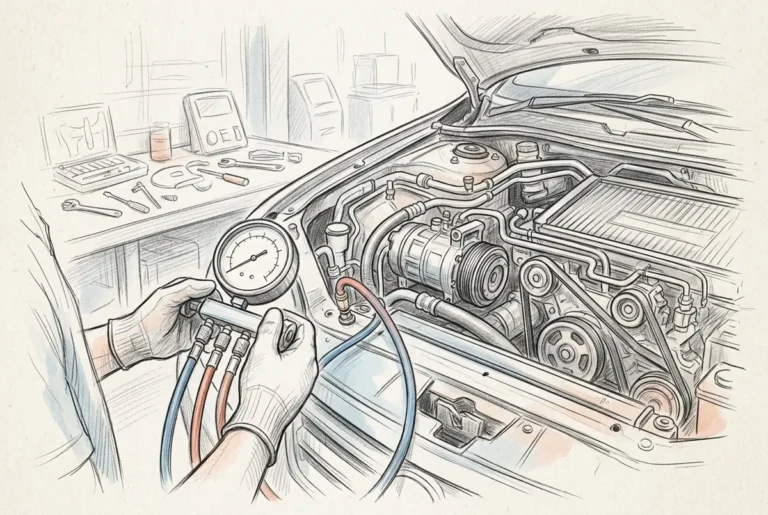
- Cooling performance: Vent temperatures and pressures show how the system is really working.
- Airflow: Clogged cabin filters or blower problems can make cold air feel weak.
- Condenser and evaporator: Blocked or damaged parts can stop heat from moving out of the system.
- Compressor operation: The compressor is the heart of the system, so it must run and engage properly.
- Electrical controls: Switches, sensors, and relays can fail and shut the system down.
At Marks Air, we use a 25-Point Cool Check to test more than 25 points of your A/C system before we recommend anything. You get a clear recommendation, a written estimate, and a timeframe. No work starts until you say yes. That kind of transparency is what keeps customers calling us back.
2. Smart Leak Detection
If your system keeps losing refrigerant, there is a leak somewhere. Period. Refrigerant does not get “used up” like gasoline. So any service that skips leak checking is leaving the job half done.
How technicians find leaks
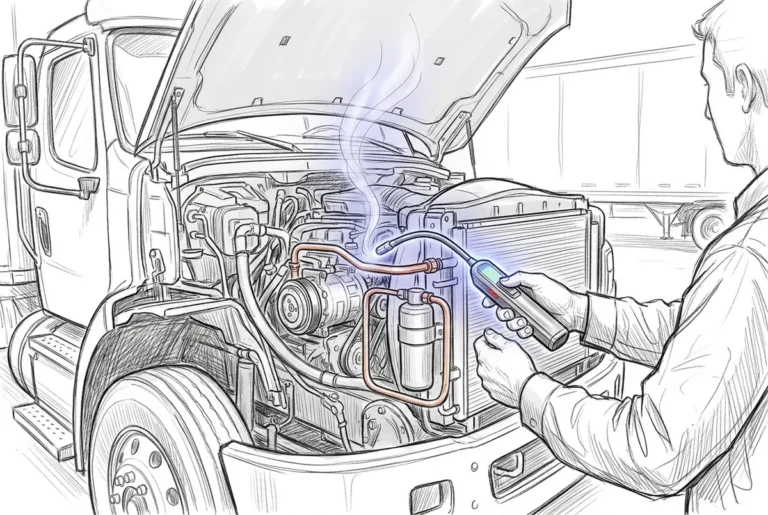
- Electronic detectors that sniff out tiny amounts of refrigerant
- UV dye that glows under a special light at the leak spot
- Visual inspection of hoses, fittings, seals, and connections
Here’s a handy fact from the EPA: a system does not need a full charge to be checked for leaks. A few ounces of refrigerant, about 10% of the normal charge, can be enough for a technician to do a leak check.
| Common Leak Spot | What Often Causes It | Typical Fix |
|---|---|---|
| Hoses and lines | Age, heat, vibration | Replace or fabricate new hose |
| O-rings and seals | Dry rot, wear | Replace seals |
| Condenser | Road debris, corrosion | Replace condenser |
| Compressor seals | Age, low lubrication | Repair or replace compressor |
| Evaporator | Corrosion over time | Replace evaporator |
Want to catch leaks before they get worse? Check out how to detect A/C leaks and the common A/C leak mistakes that cost owners more money.
3. The Right Refrigerant and the Right Equipment
This is where a professional service really shines. Today’s vehicles use different refrigerants, and they are not interchangeable. Most newer vehicles use R-1234yf, while many older ones use R-134a. They must never be mixed, and the technician should check your vehicle’s refrigerant label and manufacturer specs first.
Why proper handling matters
- The wrong refrigerant can hurt performance and damage parts
- Mixing refrigerants can contaminate the system and the shop’s recovery equipment
- EPA rules prohibit venting automotive refrigerants (carbon dioxide, R-744, is the exception)
- When refrigerant is handled or the system is opened, approved recovery equipment is required under EPA Section 609 rules
So if someone offers to “just let the old stuff out,” that’s a red flag. A proper service recovers the refrigerant, pulls a vacuum to remove moisture and air, and then recharges to the exact amount your vehicle calls for. Curious about newer systems? Read what to know about HFO-1234yf refrigerant and R-134a to 1234yf conversion.
A word on DIY recharge kits
Those store-bought cans can be tempting. But they can overcharge a system, add the wrong product, and hide a leak you need to fix. They can also make the next technician’s job harder. If you are on the fence, it is usually smarter to have a pro take a look first.
4. Repair, Re-Check, and a Warranty
The fourth must-have is follow-through. A great service does not end when the wrench stops turning. It ends when the system is tested again and you know it works.
What good follow-through looks like
- Fix the cause: Replace only what is needed, using the right parts.
- Recharge correctly: Add the exact refrigerant and oil amounts for your system.
- Re-test everything: The technician runs the full checklist again to confirm cold, steady cooling.
- Stand behind the work: Look for a written warranty on repairs.
At Marks Air, we re-run the full 25+ point check after repairs, and most repairs are backed by a one-year warranty. Being family-owned and woman-owned, we treat every vehicle like it belongs to a neighbor, because in Tampa, it often does. You can also see what customers say in our reviews or visit us on Google — Marks Air.
How Often Should You Service Your Car’s A/C?
Here’s an honest answer: there is no single yearly rule that fits every car. The EPA guidance does not set a universal annual interval. The best move is to follow your vehicle manufacturer’s maintenance schedule and get a diagnosis whenever cooling weakens, airflow changes, odd noises or smells show up, or the system keeps needing refrigerant.
That said, living in Tampa means your A/C works hard for most of the year. A quick inspection before summer can catch small problems early. Our tips on A/C maintenance for Tampa vehicle owners can help you plan.
Service needs by vehicle type
| Vehicle Type | Common Concerns | What to Prioritize |
|---|---|---|
| Cars | Slow leaks, weak airflow, compressor wear | Leak check and cabin filter |
| Trucks and fleets | Heavy daily use, driver comfort, downtime | Preventive inspections and quick repairs |
| Buses and transit | Large cabins, constant stop-and-go | Regular system maintenance |
| RVs | Long idle periods, unique systems | Pre-trip inspection |
| Heavy equipment | Dust, vibration, outdoor heat | Condenser cleaning and hose checks |
Fleet managers, you may like our tips on fleet vehicle A/C repair and the case for preventive vs. reactive maintenance.
What Does Car A/C Servicing Cost?
Prices vary based on your vehicle, the refrigerant it uses, and what the diagnosis uncovers. A simple inspection costs far less than replacing a compressor, and catching a small leak early can prevent a bigger bill later. We break it all down in how much auto AC repair costs in 2026, and you can learn about diagnostic costs too.
Tips to keep costs fair
- Ask for a written estimate before any work begins
- Ask what the diagnosis found, not just what the fix is
- Avoid repeat “top-offs” if you have a leak, since they add up
- Choose a shop with proper certification and recovery equipment
How to Pick a Shop You Can Trust
Not every shop treats A/C the same. Some do it on the side. A true A/C specialist lives and breathes this stuff every day. Marks Air has focused on vehicle and equipment A/C in Tampa since 1971, and we are proud to be a member of the Mobile Air Climate Systems Association (MACS).
Quick checklist for choosing a shop
- Technicians hold proper refrigerant handling certification
- The shop explains the diagnosis in plain language
- You get a written estimate and timeframe
- Parts are available quickly, ideally same day
- Repairs come with a warranty
Need help narrowing it down? Our guide to finding reliable auto A/C service in Tampa Bay walks you through it. You can also browse our A/C services and A/C parts pages to see what we offer.
Ready for Cold Air Again?
Good car ac servicing comes down to four things: a real diagnosis, smart leak detection, the right refrigerant and equipment, and solid follow-through with a warranty. Skip any of those, and you may be back in the shop sooner than you’d like.
The best part? You don’t have to figure it all out alone. Our friendly Tampa team is here to help cars, trucks, buses, RVs, and heavy equipment stay cool. Schedule your A/C service today, or call us at 813-988-1671 and let’s get you back on the road in comfort. We’d love to meet you!
FAQs
Q: What does a car A/C service include?
A: A good service includes a cooling performance test, inspection of hoses, belts, and components, leak detection, and refrigerant recovery and recharge if needed. At Marks Air, we run a 25-point check before and after repairs so you know it’s done right.
Q: Does recharging my car’s A/C fix a refrigerant leak?
A: Nope, a recharge only replaces the refrigerant that escaped. It won’t fix the leak itself, so the cold air usually fades again. The longer-lasting fix is to find the leak, repair or replace the leaking part, and then recharge.
Q: How often should I service my car’s A/C?
A: There’s no one-size-fits-all schedule, so follow your manufacturer’s maintenance guide. Get it checked whenever you notice weaker cooling, odd noises or smells, or if the system keeps needing refrigerant. In Tampa’s heat, a pre-summer inspection is a smart habit.
Q: What’s the difference between R-134a and R-1234yf refrigerant?
A: They’re two different refrigerants used in different vehicle generations, and they can’t be mixed. Newer vehicles typically use R-1234yf, while many older ones use R-134a. Your vehicle’s refrigerant label tells the technician which one to use.
Q: Why is my car A/C still blowing warm air after a recharge?
A: Low refrigerant isn’t the only cause of warm air. The problem could be a leak, a failing compressor, a blocked condenser, an electrical fault, or an airflow issue. A full diagnosis helps find the real cause so you’re not guessing.
Our Service Area