
Key Takeaways
-
Always insist on a real diagnosis before repairs: topping off refrigerant without finding the leak or fault just means you will be back in weeks.
-
Confirm technicians hold EPA Section 609 certification, which is legally required for anyone servicing a vehicle A/C system for payment in the U.S.
-
Ask for an itemized written estimate that separates diagnostics, parts, labor, and refrigerant service, and make sure no work starts without your approval.
-
Verify the shop handles your specific refrigerant (R-134a or R-1234yf) with proper equipment, since the two should never be mixed or swapped.
-
Check for a written warranty and read review patterns about honesty and fixes that last, not just star ratings.
-
Act early when you notice cool-but-not-cold air, weak airflow, strange noises, or musty smells, since catching problems early usually means a smaller bill.
Nothing tests your patience like climbing into a car that feels like an oven. Your A/C quits, the Tampa sun does its thing, and suddenly you need help fast. But how do you know which car ac repair shop deserves your trust?
The good news is that a few simple checks can save you time, money, and sweat. A great shop finds the real cause of poor cooling. It explains the problem in plain words. And it never just tops off refrigerant and sends you on your way.
Whether you drive a daily commuter, a pickup, a bus, an RV, or a piece of heavy equipment, this friendly guide walks you through 14 things to look for. Use it as your checklist the next time you need a car ac repair shop. By the end, you will feel ready to ask the right questions and spot the right answers.

Why Choosing the Right Car AC Repair Shop Matters
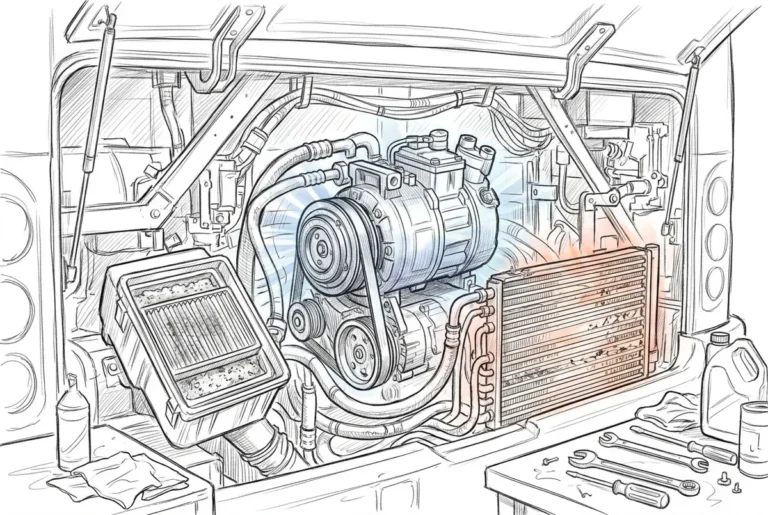
Your A/C system is more than a cold-air button. It includes the compressor, condenser, evaporator, expansion device, hoses, seals, sensors, and refrigerant. When one part acts up, the whole system can suffer.
A careless fix can turn a small leak into a big bill. A skilled team, on the other hand, finds the cause once and fixes it right. If you want a deeper look at why this work matters in our climate, read why A/C repair in Tampa is so important for your vehicle.

14 Things to Look for in a Car AC Repair Shop
1. A Real Diagnosis Before Any Repair
A good shop finds out why your A/C is warm before it adds anything. Poor cooling can come from a leak, a weak compressor, an electrical fault, blocked airflow, or a clogged cabin filter. Guessing wastes your money.
Ask the shop how it tests the system. If you want to know what warm air might mean, check out 10 reasons your AC is blowing warm air.
2. Proper Leak Testing
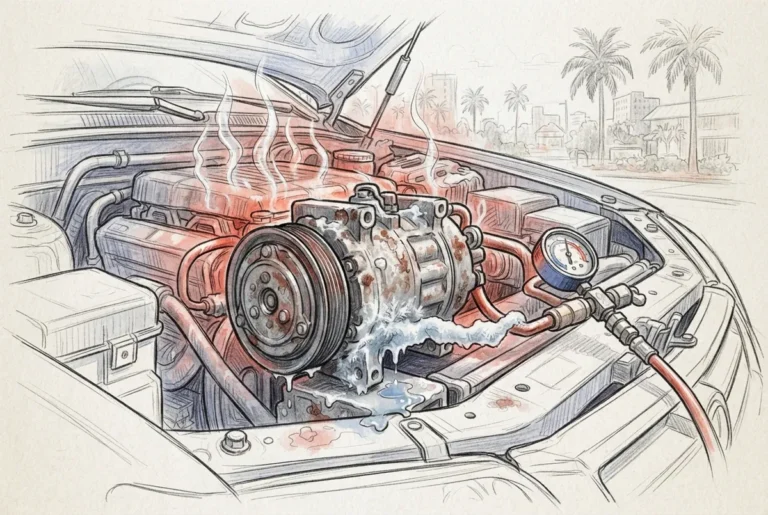
Low refrigerant almost always means a leak somewhere. Topping off the system again and again is like pumping a tire with a hole in it. It works for a little while, then you are stuck again.
Look for a shop that tests for leaks and shows you where the problem is. Our guide on how to detect A/C leaks explains what good testing looks like.
3. EPA Section 609 Certified Technicians
Here is a big one. Under U.S. Clean Air Act Section 609, anyone who services a motor vehicle A/C system for payment or barter must be trained and certified through an EPA-approved program. This applies no matter which refrigerant the vehicle uses.
Ask politely if the technicians hold this certification. A trustworthy shop will happily say yes. Curious about the training side? See A/C training options for techs who want to level up.
4. Approved Refrigerant-Handling Equipment
Shops in the United States must use refrigerant-handling equipment certified by the EPA or an EPA-approved standards organization. They also keep records for technician certifications and recovered refrigerant. The EPA says shops must retain these records for three years.
That paperwork is not just red tape. It shows a shop takes the rules, and your vehicle, seriously.
5. Refrigerant Recovery, Never Venting
Regulated refrigerants must not be intentionally released during service. A professional shop recovers refrigerant with proper equipment instead of letting it float into the air.
If a shop seems casual about this, keep looking. Good habits protect the environment and your wallet.
6. Experience With Your Refrigerant Type
Not every vehicle uses the same refrigerant. Some use R-134a, and many newer vehicles use R-1234yf. The right service steps and equipment depend on which one your vehicle has, and they should never be mixed or swapped.
Ask if the shop is comfortable with your refrigerant. For fleets curious about the newer type, take a look at HFO-1234yf refrigerant for fleets.
7. A Clear, Itemized Estimate
You deserve to know what you are paying for. A good estimate separates diagnostic work, parts, labor, and refrigerant service. No mystery fees. No pressure.
Better yet, the shop should wait for your approval before doing any work. If cost is on your mind, our guide on how much auto AC repair costs in 2026 can help you set expectations.
8. Experience With Your Type of Vehicle
A compact car and a transit bus have very different A/C systems. The same goes for an RV rooftop unit or an excavator cab. Pick a shop that has seen your kind of vehicle before.
At Marks Air, the team works on cars, trucks, buses, RVs, emergency vehicles, and heavy equipment, all in one Tampa facility.
9. Access to Quality Parts
Waiting days for a simple part can leave you sweating longer than you should. A shop with strong parts access gets you back on the road sooner.
Marks Air stocks a full line of A/C parts, including its KOOL-TEMP line, with many items available the same day. You can browse A/C parts or learn more in 6 A/C parts every vehicle owner should know.
10. A Written Warranty
A shop that stands behind its work will tell you so in writing. Ask how long the warranty lasts and what it covers. A warranty shows confidence, and confidence usually comes from skill.
11. A Clear Repair Process
The best shops follow a repeatable process, so nothing gets missed. Marks Air uses a 25-point Cool Check. Here is how it works:
- Schedule and drop off: Book an appointment and bring the vehicle in.
- Inspect: Technicians test 25+ points of your A/C system.
- Recommend and estimate: You get a clear recommendation, a written estimate, and a timeframe. No work starts until you approve.
- Repair: Only what is needed gets replaced, using the right parts.
- Re-check: The technician runs the full checklist again.
- Back on the road: Your vehicle is cool, verified, and backed by a one-year warranty on most repairs.
You can read more about our proven process online.
12. A Good Local Reputation
Reviews tell you what real customers experienced. Look for patterns, not just star counts. Do people mention honesty, fair pricing, and fixes that last?
You can see what neighbors say through customer reviews, on Yelp, or by visiting our Marks Air location on Google. For tips on reading reviews well, try how to read AC repair shop reviews.
13. Industry Involvement and Long-Term Experience
Shops that stay active in their industry tend to stay current. Marks Air is a family-owned, woman-owned business that has served Tampa since 1971. It is also a member of the Mobile Air Climate Systems Association (MACS), which helps the team stay aligned with current standards.
Decades of focus on one thing, auto A/C, means fewer surprises and fewer unnecessary repairs. Learn more about Marks Air.
14. Friendly, Honest Communication
This one is simple. You should feel comfortable asking questions. A great shop explains things without talking down to you, and it respects your time and budget.
If a shop dodges your questions or pushes you to decide on the spot, trust your gut and look elsewhere.
Quick Comparison: Great Shop vs. Red-Flag Shop
| What to Check | Great Car AC Repair Shop | Red-Flag Shop |
|---|---|---|
| Diagnosis | Finds the cause before repairing | Just adds refrigerant |
| Technician training | EPA Section 609 certified | Vague or no answer |
| Estimate | Itemized and written | One lump number |
| Refrigerant handling | Recovers with approved equipment | Casual about venting |
| Warranty | Clear and in writing | None or unclear |
| Approval | Waits for your okay | Starts work without asking |
Questions to Ask Before You Hand Over the Keys
A few friendly questions go a long way. Keep these handy when you call or visit:
- How will you diagnose the problem?
- Are your technicians EPA Section 609 certified?
- Do you work on my refrigerant type (R-134a or R-1234yf)?
- Can I get an itemized written estimate?
- What warranty do you offer on repairs?
- How long will the repair take?
If you want a longer list, our FAQs page covers many common questions.
Special Tips for Fleets, Buses, RVs, and Heavy Equipment
Downtime hurts when you run more than one vehicle. If you manage a fleet, a shop that offers fast diagnostics, parts on hand, and clear timelines is worth its weight in gold. Fleet owners can find money-saving ideas in 4 fleet vehicle AC repair tips.
Bus and transit operators need steady cooling for passengers every day. Heavy equipment operators need A/C that fights fatigue in hot, dusty work zones. RV owners need a team that understands less common systems. In every case, ask whether the shop has real experience with your vehicle type before you commit.
When to Visit a Car AC Repair Shop
Do not wait for a total breakdown. Small signs often show up first:
- Air that is cool but not cold
- Strange noises when the A/C turns on
- Weak airflow from the vents
- Musty smells from the dashboard
- The A/C cycling on and off
Catching problems early often means a smaller bill. For a handy rundown, see 5 signs you need car AC repair.
Ready for Cold Air Again?
Picking the right car ac repair shop does not have to feel stressful. Look for honest diagnosis, certified technicians, clear estimates, quality parts, and a warranty you can count on. Do that, and you will keep cool all summer long.
At Marks Air, we have been keeping Tampa vehicles cool since 1971, and we would love to help you next. Schedule service today or call us at 813-988-1671 to bring your vehicle in. We will find the real problem, fix it right, and get you back on the road feeling fresh.
FAQs
Q: Why is my car A/C blowing warm air?
A: Warm air can come from low refrigerant caused by a leak, a failing compressor, an electrical problem, or blocked airflow. The only way to know for sure is a proper diagnosis. Skip the quick top-off and have a shop find the real cause.
Q: Do car A/C technicians need EPA Section 609 certification?
A: Yes. Anyone who services or repairs a motor vehicle A/C system for payment or barter must be trained and certified through an EPA-approved program. This applies no matter which refrigerant the vehicle uses, so it is totally fair to ask your shop about it.
Q: Does low refrigerant mean my car has an A/C leak?
A: In most cases, yes. A sealed A/C system should not lose refrigerant on its own. If yours is low, a good shop will test for leaks instead of simply adding more.
Q: What is the difference between R-134a and R-1234yf?
A: They are two different refrigerants used in vehicle A/C systems. The right one depends on your vehicle, and they should never be mixed or swapped. Shops also need the correct equipment and procedures for each type.
Q: How can I choose a reliable car A/C repair shop?
A: Ask if the shop tests for leaks, explains its diagnosis, and has experience with your vehicle and refrigerant. Look for an itemized estimate that separates diagnostics, parts, labor, and refrigerant service. A written warranty is a great sign too.
Our Service Area