
Key Takeaways
-
A good car AC mechanic finds the root cause of poor cooling, especially any leak, before adding refrigerant, since low refrigerant means something has leaked.
-
Ask whether the technician holds EPA Section 609 certification, which is required for paid motor-vehicle A/C service in the United States.
-
Expect a systematic inspection covering visual hose and belt checks, system pressures, leak detection, compressor clutch, condenser and fans, and electrical controls.
-
Get a written estimate that lists parts, labor, and leak testing separately, and confirm the shop offers a warranty on its repairs.
-
Use a shop that matches your vehicle type: A/C specialists often handle buses, RVs, and heavy equipment that general repair shops may refer out.
-
Watch for warning signs like warm air, weak airflow, rattling or clicking when the A/C runs, musty smells, or water pooling inside the cabin, and schedule service early.
Few things feel worse than climbing into a hot car in Tampa, hitting the A/C button, and getting a blast of warm, muggy air. We have all been there. Your first thought is probably, “Who can fix this, and what is it going to cost me?” That is where a good car ac mechanic comes in.
A car ac mechanic is a trained professional who finds out why your cooling system is failing and fixes it the right way. The best ones do not just add refrigerant and send you on your way. They look at the whole system, from the compressor to the condenser to the little electrical parts that tell everything what to do.
In this guide, we walk through ten things a skilled car ac mechanic checks before touching your wallet. Whether you drive a family sedan, run a delivery truck, manage a bus fleet, or own an RV, knowing what a proper A/C visit looks like helps you spot a great shop and avoid costly guesswork.

What Does a Car AC Mechanic Actually Do?
A car ac mechanic diagnoses, maintains, and repairs your vehicle’s air-conditioning system. That includes the compressor, condenser, evaporator, hoses, fans, and controls. Think of the system like a loop that moves heat out of your cabin. If any piece in that loop struggles, your air turns warm.
This is skilled work. The U.S. Bureau of Labor Statistics reported about 825,800 automotive service technician and mechanic jobs in 2025, and A/C technicians are part of that group. Not every tech specializes in cooling, though. A shop that focuses on A/C, like Marks Air, sees the same problems again and again, which makes spotting the real cause much faster.

10 Things a Good Car AC Mechanic Checks First
When you bring your vehicle to a careful shop, expect a step-by-step approach. Here are the ten checks that matter most.
1. Your Story and Symptoms
A great mechanic starts by listening. When did the cooling get weak? Does it blow cold on the highway but warm at red lights? Is there a strange smell or noise? Your answers point toward the likely cause before any tools come out.
2. A Visual Inspection Under the Hood
Next comes a close look at the hoses, belts, fittings, and connections. Oily residue around a fitting often means refrigerant oil is escaping, which can signal a leak. A cracked belt or a damaged fan also shows up quickly here.
3. System Pressures and Temperatures
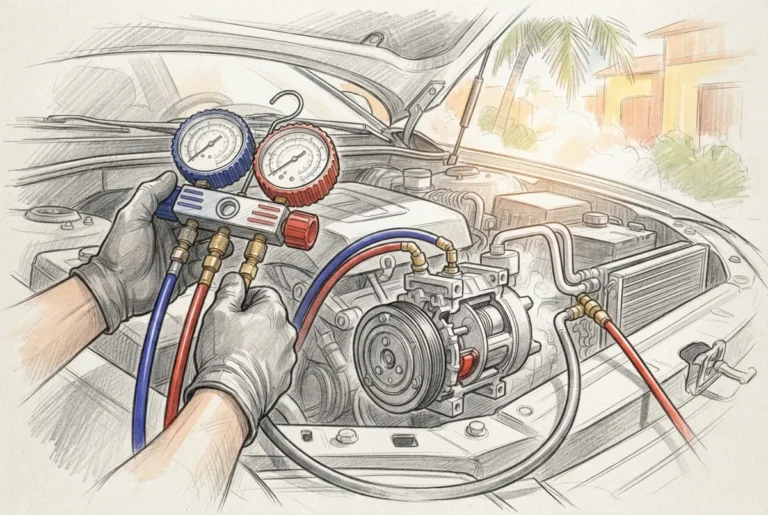
Gauges tell a story. A mechanic checks the high-side and low-side pressures and measures the air temperature at the vents. Those numbers show whether the system is low on charge, blocked, or working too hard.
4. Leak Detection
Refrigerant does not get “used up” like gas. If your system is low, it leaked somewhere. A good car ac mechanic uses proper leak-detection methods to find the source instead of just topping off the system. Curious how this works? Our guide on how to detect A/C leaks in your truck explains the basics.
5. The Compressor and Its Clutch
The compressor is the heart of the system. The mechanic checks whether the clutch engages, listens for grinding or rattling, and looks for signs of internal wear. If you suspect trouble here, read about what every driver needs to know about A/C compressor replacement.
6. The Condenser and Cooling Fans
The condenser sits near the front of your vehicle and releases heat. Road debris, bent fins, or a dead fan can stop it from doing its job. In Tampa’s heat and stop-and-go traffic, weak fans are a very common reason the A/C struggles at low speeds.
7. Electrical Controls
Fuses, relays, pressure switches, and sensors all tell the system when to run. A single bad switch can shut everything down even when the mechanical parts are fine. Testing the electrical side saves you from replacing parts you do not need.
8. The Blower Motor and Cabin Airflow
Sometimes the air is cold but barely moves. That points to a weak blower motor, a clogged cabin filter, or a blocked duct. Truck owners dealing with this will find helpful tips in our article on truck A/C blower motor repair fixes that actually work.
9. The Correct Refrigerant Type
Not every vehicle uses the same refrigerant, and the service fittings are different too. A proper mechanic identifies what your vehicle is designed to use and does not mix refrigerants. Newer vehicles often use HFO-1234yf, which you can learn about in our post on HFO-1234yf refrigerant for fleets.
10. The Evaporator and Moisture Issues
The evaporator hides behind your dash, so it takes more work to inspect. A clogged or leaking evaporator can cause weak cooling, musty smells, or even freezing. If this part fails on a larger vehicle, our guide on heavy-duty A/C evaporator replacement shows what the job involves.
Why a Quick Recharge Is Not Always the Answer
It is tempting to grab a recharge can and hope for the best. We understand the appeal, since it looks cheap and fast. But adding refrigerant without finding the cause of poor cooling can leave a leak or fault in place. It can also overcharge the system, which strains the compressor.
Refrigerant handling is also regulated. In the United States, anyone who services a motor-vehicle A/C system for payment or barter must hold EPA Section 609 certification and use approved refrigerant-handling equipment. That is not just red tape. It protects the environment and makes sure the work is done correctly.
EPA Section 609: What It Means for You
When you hire a car ac mechanic, you are trusting them with a regulated system. Section 609 certification shows the technician has been trained to recover refrigerant properly and avoid venting it into the air. According to the EPA’s Section 609 technician training and certification programs, this training is required for paid motor-vehicle A/C service.
Marks Air is a member of the Mobile Air Climate Systems Association (MACS) and also trains other technicians. If you work in the trade and want to sharpen your skills, our training programs cover EPA 609, HFO-1234yf, and more.
Quick Comparison: Mechanic Types
Not every shop is built the same. This table shows how general repair shops and A/C specialists often differ.
| Feature | General Repair Shop | A/C Specialist Shop |
|---|---|---|
| Focus | Many repair types | Air conditioning only |
| Diagnostic depth | Often basic pressure checks | Full system testing |
| Parts access | Ordered as needed | Large A/C parts inventory |
| Hard-to-find systems | May refer out | Handles buses, RVs, heavy equipment |
| Leak tracing | Sometimes skipped | Standard practice |
A specialist is not always required, but for stubborn problems, older systems, or large vehicles, that focused experience can save time and money.
How to Choose a Reliable Car AC Mechanic
Finding the right shop does not have to feel stressful. Use these simple questions to guide you:
- Do you hold EPA Section 609 certification? The answer should be a quick yes.
- Will you find the cause before recharging? You want diagnosis first, not a guess.
- Can I get a written estimate? It should list parts, labor, and any leak testing.
- Is there a warranty? A shop that stands behind its work is a good sign.
- Do you work on my type of vehicle? Cars, trucks, buses, and RVs all have different systems.
For more help, take a look at our guides on what to look for in a car A/C repair shop and how to choose an auto A/C repair shop you can trust.
What a Proper A/C Visit Looks Like at Marks Air
At Marks Air, we follow a clear, simple process we call the 25-Point Cool Check. Here is how it works:
- Schedule and drop off. You book an appointment and bring your vehicle in.
- Inspect. We test more than 25 points of your A/C system.
- Recommend and estimate. You get a clear recommendation, written estimate, and timeframe. No work starts until you approve.
- Repair. We replace only what is needed, using the right parts.
- Re-check. The technician runs the full checklist again.
- Back on the road. Your A/C is cool, verified, and backed by a 1-year warranty on most repairs.
Marks Air has served Tampa since 1971. We are a family-owned, woman-owned shop, and A/C is all we do. You can see what customers say by visiting our Marks Air location on Google or reading reviews on Yelp.
What Does Car A/C Repair Cost?
Costs vary a lot. A small fix, like a bad relay or a clogged filter, costs far less than replacing a compressor or evaporator. The type of vehicle, the refrigerant it uses, and how hard the part is to reach all change the price. We break this down in detail in our post on what vehicle owners pay for A/C repair in 2026.
The best way to protect your budget is to ask for an estimate that lists parts and labor separately. A fair shop is happy to explain every line.
Different Vehicles, Different Needs
Not every vehicle cools the same way, and your mechanic should know the difference.
- Cars and SUVs: Usually need quick, accurate diagnosis to stay comfortable in summer traffic.
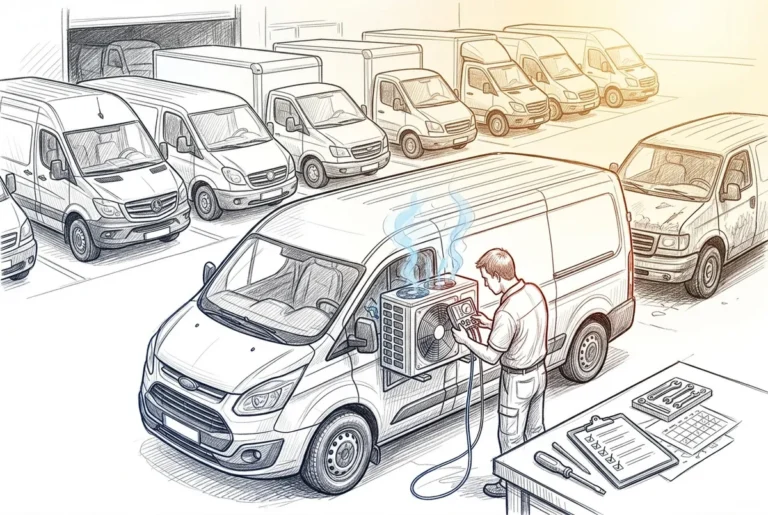
- Trucks and fleets: Need fast turnaround so drivers stay on the road. Our article on preventive vs. reactive fleet A/C maintenance shows how planning cuts downtime.
- Buses and transit: Need strong cooling for passenger comfort and safety.
- RVs: Often have rooftop or specialty systems that need expert troubleshooting.
- Heavy equipment: Operators need cooling to avoid fatigue in hot outdoor work. Learn more about getting heavy equipment A/C repair done right.
Simple Habits That Make Your A/C Last Longer
You can help your mechanic by taking care of your system between visits. These small habits go a long way:
- Run your A/C for a few minutes every week, even in cooler months, to keep seals moist.
- Replace your cabin air filter on schedule.
- Keep the front of your vehicle clear of leaves and debris.
- Do not ignore strange sounds, smells, or weak airflow.
- Get a checkup before the hottest months arrive.
Our post on A/C maintenance tips every Tampa vehicle owner needs has more easy ideas.
Signs It Is Time to See a Car AC Mechanic
Do not wait for a total breakdown. Watch for these warning signs:
- Air that is warm or only slightly cool
- Weak airflow from the vents
- Loud rattling, squealing, or clicking when the A/C runs
- A musty or sour smell from the vents
- Water pooling inside the cabin
- The A/C working sometimes and quitting other times
If any of these sound familiar, our guide on 8 warning signs your car A/C is failing can help you decide what to do next.
Ready for Cold Air Again?
A good car ac mechanic does more than add refrigerant. They listen, test, trace the real cause, and fix only what needs fixing. That approach protects your money and keeps your cooling system running longer. Whether you drive a daily commuter, manage a fleet, or run heavy equipment, the right shop makes all the difference when Tampa’s heat arrives.
Our friendly team at Marks Air has been keeping Tampa vehicles cool since 1971. Schedule service with Marks Air today, or call us at 813-988-1671 to talk with a real A/C specialist. We would love to get you back on the road with cold air blowing.
FAQs
Q: What does a car AC mechanic do?
A: A car AC mechanic diagnoses, maintains, and repairs your vehicle’s air-conditioning system. That includes the compressor, condenser, evaporator, hoses, and controls. A good one finds the real cause of poor cooling before recommending any repair.
Q: Does a car AC mechanic need EPA certification?
A: Yes. In the United States, anyone who services a motor-vehicle A/C system for payment or barter must hold EPA Section 609 certification and use approved refrigerant-handling equipment. It is a good idea to ask any shop to confirm this before work begins.
Q: Can a mechanic just recharge my car AC without fixing a leak?
A: They can, but it is rarely a smart fix. If your system is low on refrigerant, it likely has a leak, and topping it off only hides the problem for a while. A careful mechanic finds and repairs the leak first so the cooling lasts.
Q: Why is my car AC blowing warm air?
A: Common causes include low refrigerant from a leak, a failing compressor, a bad condenser fan, or an electrical fault like a worn switch or relay. Since many problems look alike from the driver’s seat, a proper diagnosis is the best way to know for sure.
Q: How do I choose a reliable car AC repair shop?
A: Ask if the technician holds EPA Section 609 certification, whether they will diagnose the cause before recharging, and if you will get a written estimate listing parts and labor. A shop that offers a warranty and specializes in A/C is usually a strong choice.
Our Service Area